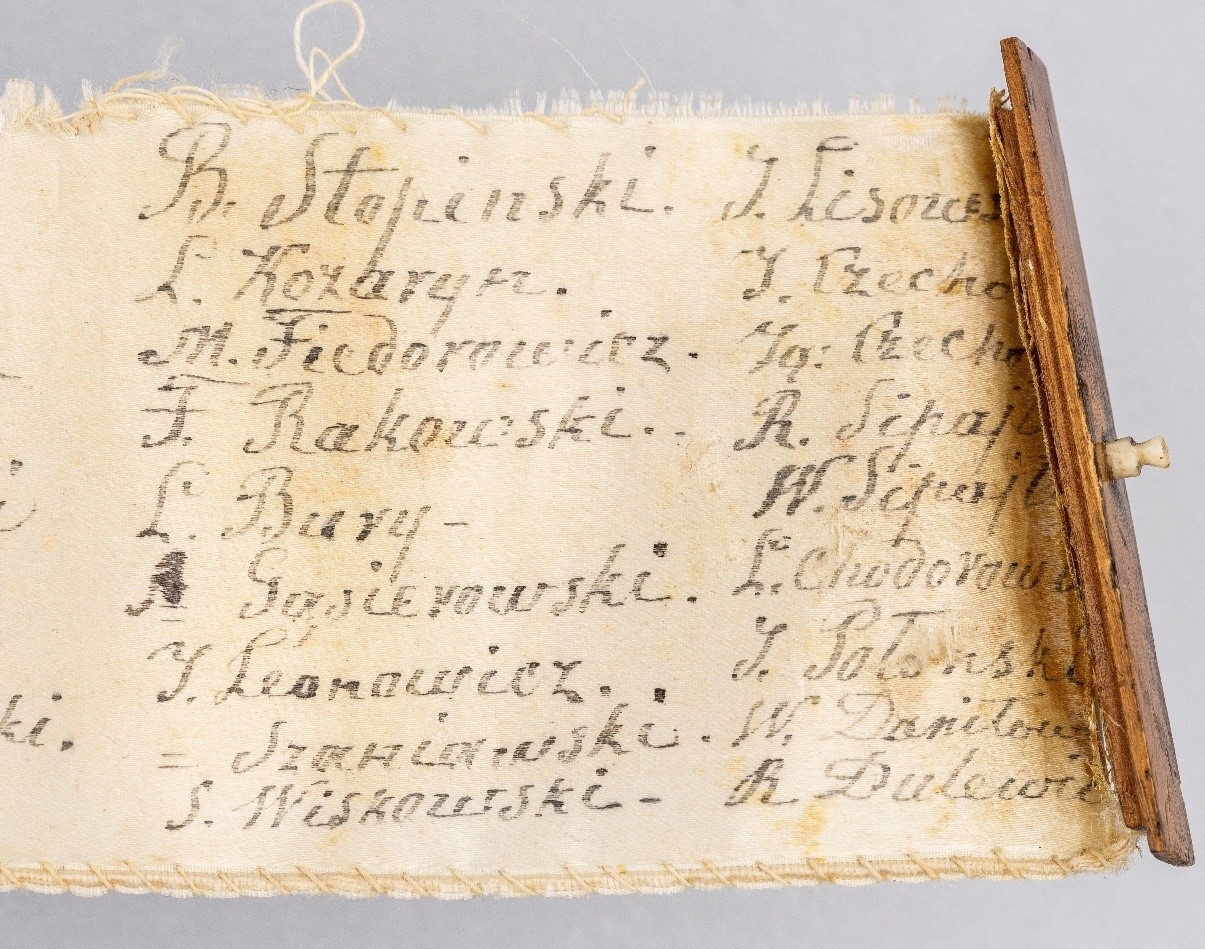

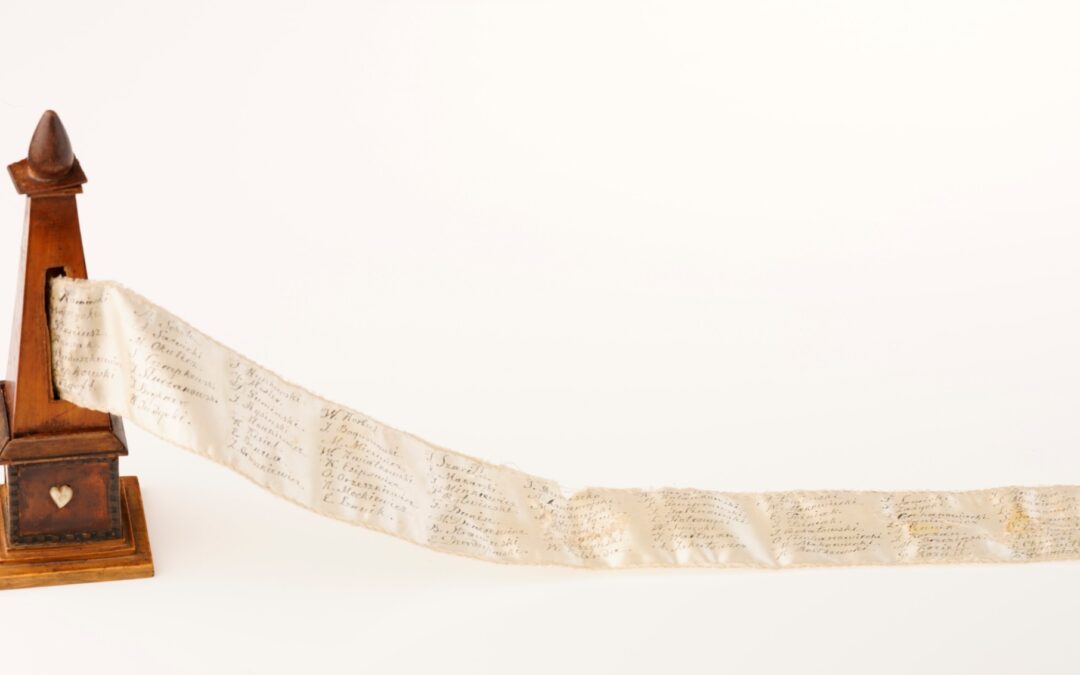
This is a truly unique artifact: a small, handmade larch-wood obelisk dedicated to the insurgents of the January Uprising. Concealed within it is a sash bearing the names of 136 individuals.
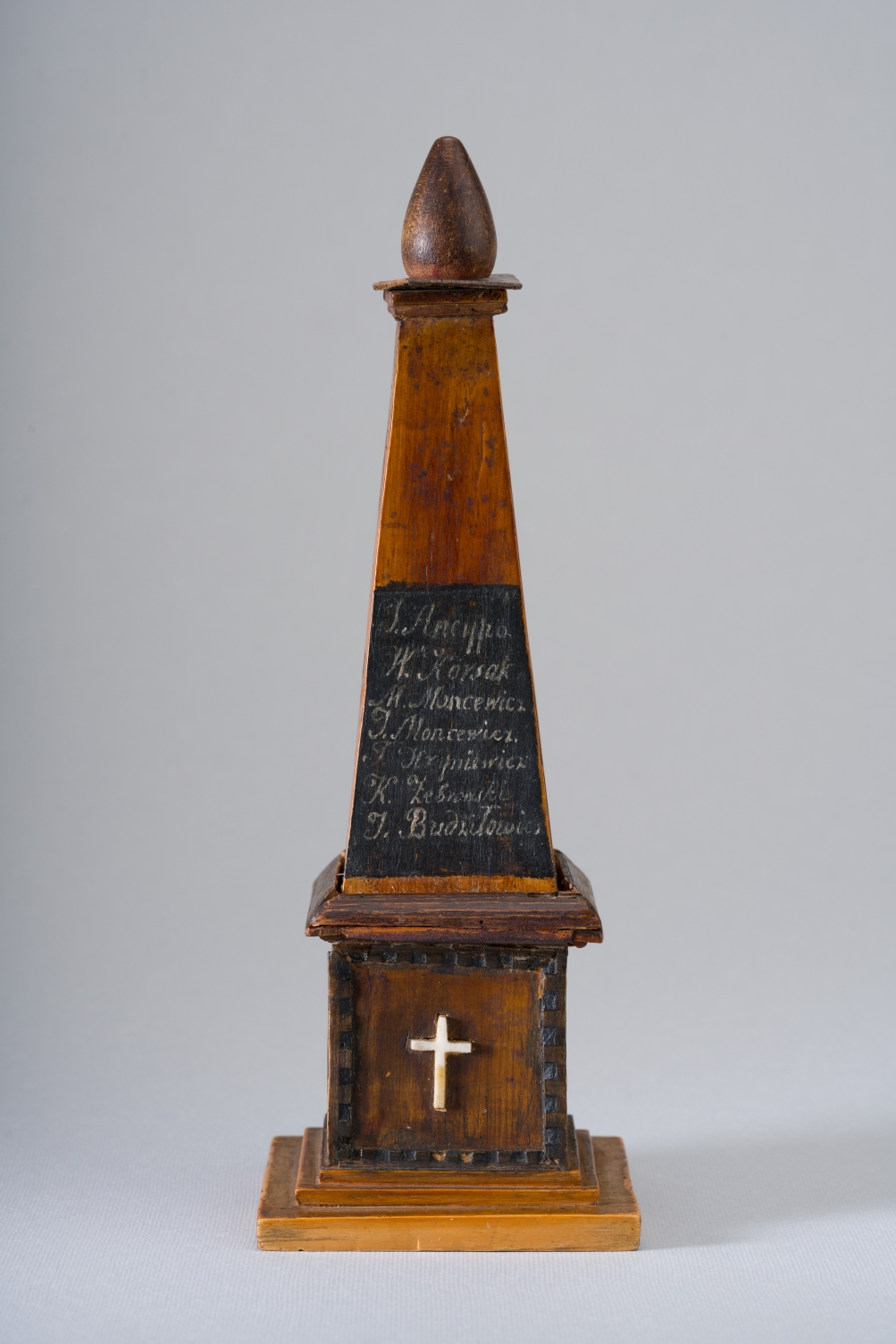
Detailed examinations conducted after acquiring this artifact revealed that the names of insurgents from the Mogilev region – executed pursuant to sentences handed down by the Russian field court in Mogilev on June 6, 1863 – were inscribed on its outer wall on a black background: Ildefons Ancypo, leader of the uprising in the Bykhov district; Włodzimierz Korsak, leader of the uprising in the Mogilev district; Michał and Jan Mancewicz, artillery ensigns in the Tsarist army who joined the uprising; Tomasz Hryniewicz, leader of the uprising in the Rogachev district, executed by firing squad on July 28, 1863, in Rembertów; Konstanty Żebrowski, an artillery lieutenant in the Tsarist army who joined the uprising and was executed by firing squad on June 24, 1863; and Ignacy Budziłowicz, leader of the uprising in the Orsha district, executed by firing squad on August 28 of that year in Orsha.
The date – April 23 – is also inscribed on the exterior of the obelisk; this marks the day the 1863 uprising broke out in the Mogilev region.
A silk sash coiled inside the obelisk bears the names of 136 insurgents from the Mogilev region, including over a dozen pupils and students from the Agrotechnical Institute in Hory-Horki – the first agricultural school in the Russian Empire. A large group of these young people, led by Ludwik Zwierzdowski (nom de guerre “Topór”), took up arms in the uprising. While not all individuals on the list have been identified, the majority were either exiled to Siberia or sentenced to other punishments for their participation in the insurrection.
We do not know who created the obelisk, nor do we know its history. We only know that the family story passed down to us by the donors does not align with the facts – facts revealed, for instance, by the scant information contained in the inscriptions made by the object’s creator.
Analysis upon: P. Borowik, Tajemnice powstańczego obelisku. Nieznane źródło do dziejów powstania styczniowego na Mohylewszczyźnie, Biuletyn Historii Pogranicza 22/2022, p. 83–99.