


Tatsiana Astrouskaya
“As 500 years ago, truth and justice stand with us”. The quotation I use in the title of this essay comes from the Belarusian opposition politician Sviatlana Tsikhanoŭskaya. She delivered this speech on Belarusian Military Glory Day, September 8, 2024. On this very day in 1514, at the Battle of Vorsha (Orsha), the united army of the Grand Duchy of Lithuania defeated the Muscovite forces, despite the latter being much greater in number. This narrative of the Battle of Orsha has been a significant component of alternative memory discourses in Belarus since the early 1990s and has acquired renewed relevance with the outbreak of the Russo–Ukrainian War and the expansion of Russia’s political and cultural influence.
In Search of Dissent and Its Legacies
Tsikhanoŭskaya’s invocation of this event illustrates how the ongoing Belarusian struggle for political and cultural subjectivity is shaped simultaneously by the universal language of human and political rights – she speaks of truth (praŭda) and justice (spraviadlivasts) – and by the language of national self-determination. By commemorating this historical episode, she emphasizes Belarus’s long history, presented here as a continuous narrative of resistance to and emancipation from Russia, echoing topics perhaps more familiar to a contemporary reader from the ongoing Ukrainian debates about decolonisation of history and culture.
This discursive “cocktail” mixed by Tsikhanoŭskaya (or her advisors) demonstrates how crucial references and historical examples are in defining what resistance is. Similarly, it demonstrates that understanding contemporary events – resistance and repression in Belarus – requires thinking in a long durée perspective.
There is a need for such references, yet the legacy of dissent (in the broader sense of the term) has so far been deployed in Belarus only to a very limited extent. Among the reasons for this are the repeated disruptions of the country’s intellectual tradition, including the physical annihilation of many of its bearers during the height of the Stalinist purges and the Second World War, as well as the repressive policies of the Soviet state. Furthermore, the contemporary Lukashenka regime has done everything possible to erase the legacy of dissent from the collective memory of Belarusians. Another important factor is the assault on academic freedom in Belarus, which began in the mid-1990s. Since 2020, this assault has surged dramatically, encompassing the forced emigration of scholars and widespread political repression.
Despite the relative recentness of Soviet history, the history of dissent in Belarus is often difficult to trace due to neglect, fear, or deliberate erasure. Both primary and secondary sources are scarce and hard to access, which creates a self-reinforcing cycle of invisibility. This effect arises when a lack of discussion about “minor” cultures of uncensored publishing further diminishes their presence in the landscape of dissident cultures, thereby limiting research and preservation opportunities.
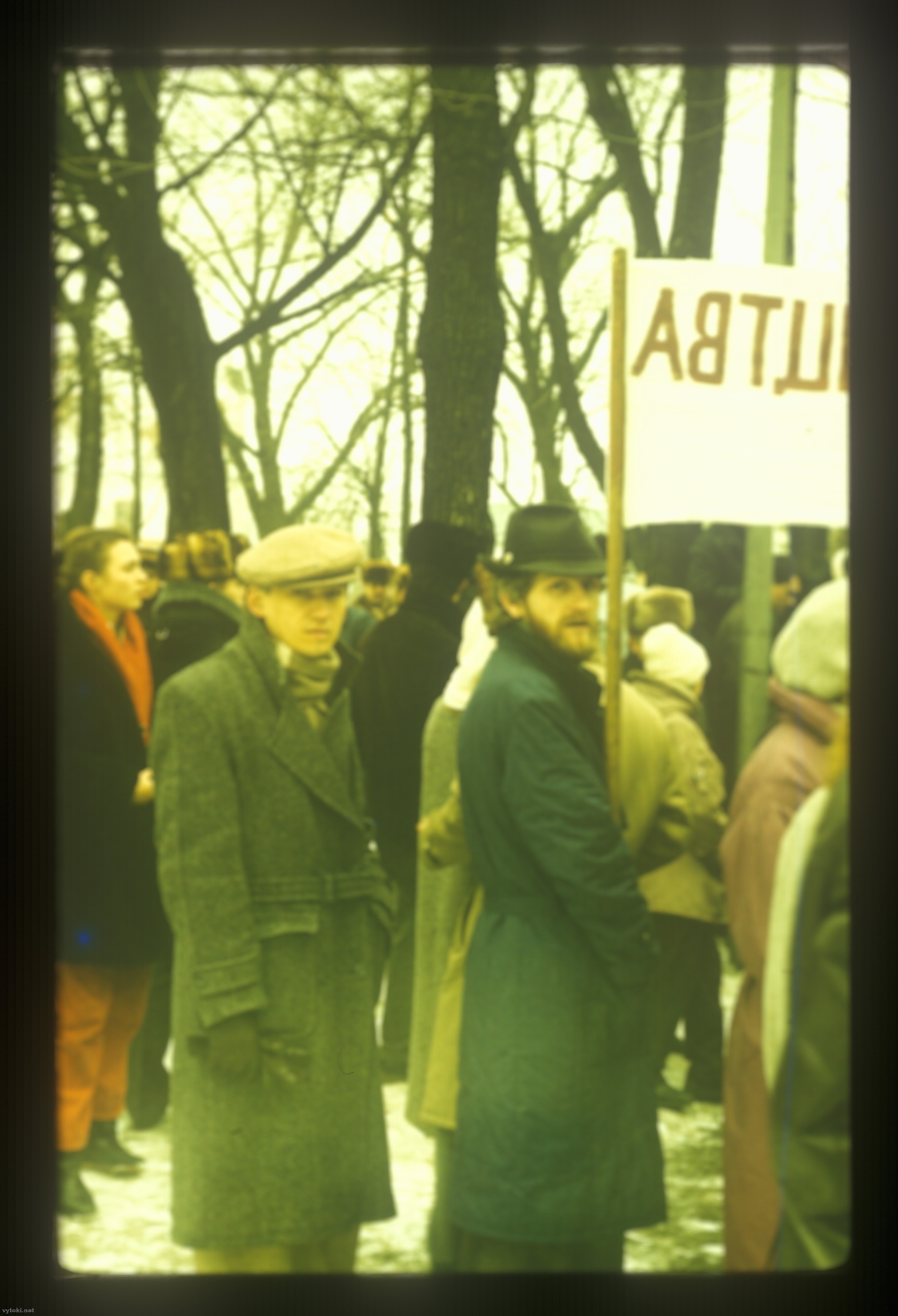
One example will suffice: two prominent activists who worked to archive and preserve the legacy of Soviet dissent were imprisoned and sentenced to long prison terms, namely Ales Bialiatski (b. 1964, 10 years, released in 2025 after spending 4.5 years in detention) and Viachaslaŭ Areshka (b. 1955, 8 years). I will discuss Ales Bialiatski and his activities in more detail below, yet it is important to note that Areshka was one of the creators and editors of the digital archive vytoki.net – one of the most important repositories for the history of cultural and political opposition under late socialism. Areshka, who is now seventy-one years old, lost his eyesight in prison, but this did not in any way affect his strict detainment regime.
Belarusian Dissent Under Late Socialism
Belarus experienced a moderate level of dissent during late socialism – the conditions for resistance differed across the Soviet borderlands, and Belarus occupied a distinctive position. Starting from the early 1960s, large numbers of nuclear weapons were deployed on its territory, which was placed under tight control. Its intelligentsia had no contact with the diaspora in the West, nor were Belarusian activists able to connect with foreign embassies or international correspondents. What forms of dissident activities could emerge in places far removed from the major intellectual centres, where contact with the outside word remained limited? As I have argued in my book “Cultural Dissent in Soviet Belarus” (2019), one possible way of resisting the regime was to push the boundaries from inside by broadening the cultural field and imbuing it with new meanings and alternative notions.
In Soviet Belarus too, there were people who, against all odds, made remarkable intellectual efforts to introduce alternative ideas into the rigid political and ideological landscape. Among them was the autodidact historian Mikola Yermalovich (1921–2000), who produced one of the first samizdat journals in the early 1960s and 1970s. He had also authored the first samizdat historical essay, which reinterpreted the history of the Grand Duchy of Lithuania in ways that directly challenged the official historical narrative. Yet another prominent example was the poet, activist and Gulag prisoner Larysa Henijuš (1910–1983). In 1948, she was forcibly deported from Czechoslovakia, where she had lived with her husband and son since 1936, then brought to the Soviet Union tried and sentenced to 25 years of Gulag. Even if still little known, her Gulag memoirs represent one of the most remarkable examples of Gulag prose – written free from self-censorship and external editorial interference. Although officially recognized writers such as Vasil Bykaŭ (1924–2003) and Ales Adamovich (1927–1994) did not openly oppose the Soviet state until 1988, they consistently insisted on their literary mission and vision, which they understood as serving the principles of truth and justice – principles echoed several decades later in Tsikhanoŭskaya’s speech.
Further in this section, I will focus on one particular example to demonstrate how the seed of ideas that were sown during late socialism reappear in contemporary intellectual and political debates.
An anonymous and uncensored “Letter to a Russian Friend” was written in Moscow in 1976–1977, subsequently being smuggled to Poland and then Great Britain; it was first published in 1979 in London in Russian (in the original) and English (Letter 1979) as a bilingual edition. In 1991, in anticipation of Belarusian independence, the Belarusian Moscow-based linguist and literary scholar Aliaksei Kaŭka (1937–2024) republished the text in the almanac “Skarynich”, by this also recognizing and reclaiming his authorship.
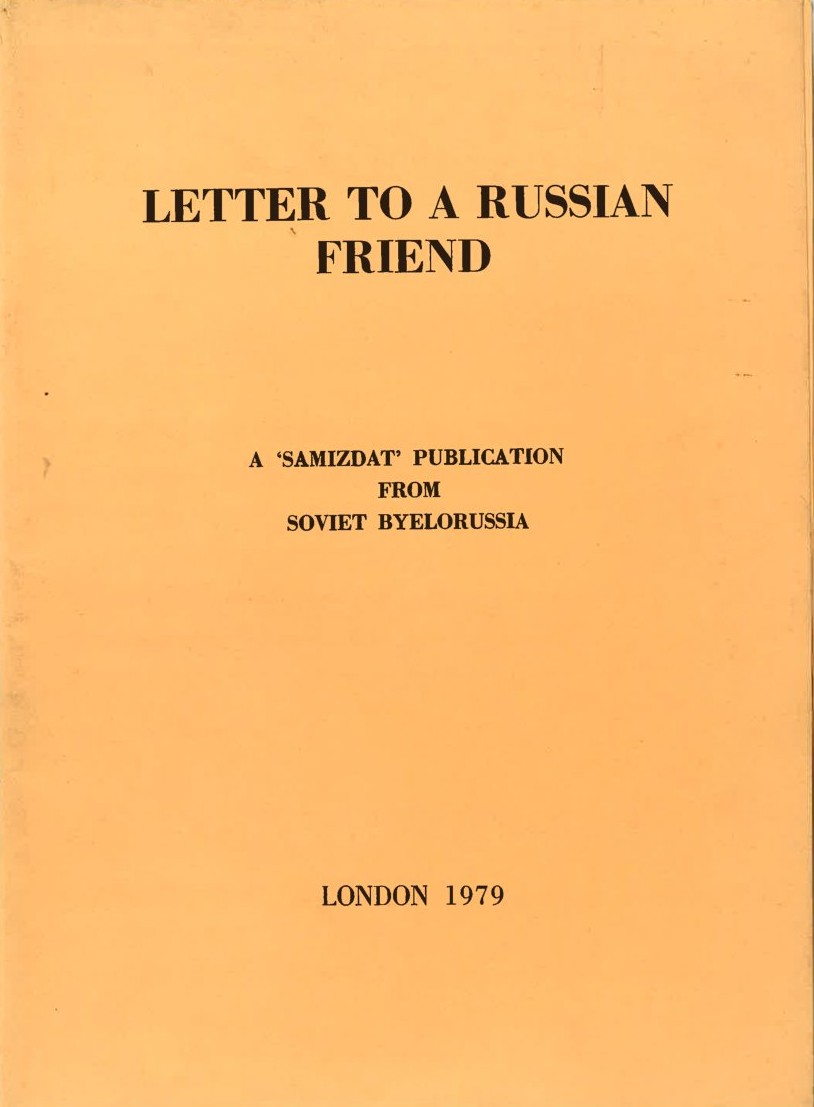
The “Letter” laments the fate of the Belarusian language, registering its rapid disappearance from everyday use. Kaŭka goes further still, explaining this disappearance as a consequence of Russian imperial and, by extension, Soviet nationality policies. In fact, he goes so far as to suggest that Soviet cultural policies had a colonial character, describing the Belarus of his own time as a “cultural parallel of colonial Africa”.
“Letter to a Russian Friend” is the first classic Belarusian tamizdat – created on one side of the Iron Curtain, then smuggled abroad and published on the other side. Yet, its author is rarely, if ever, referred to as a dissident. Indeed, he was a successful Komsomol functionary, a scholar and an employee of the Soviet embassy in Poland in 1979–1982. Yet, such cases were by no means unique in the Soviet national republics. Many individuals operating within the Soviet system sought ways to change it. One of the most prominent cases in Soviet Ukraine was that of the literary critic Ivan Dziuba’s seminal work “Internationalism or Russification?” Dziuba was one of the first to study the nature of Russian cultural colonialism, a question that, with regard to Belarus, would also come to occupy Aliaksei Kaŭka a few years later:
So, this is indeed a worrying problem; we are now witnessing in Byelorussia a process of wide-scale assimilation. Those responsible for this process of national spiritual castration are acting under the banners of ‘internationalisation’ and the ‘inevitable fusion of nations’. They ignore the elementary truth that the future united family of man will not be formed out of tongueless nations of castrati (original emphasis – TA) who have forgotten their names and true worth; each nation will bring its own unique understanding of truth and beauty. Why should Byelorussians have to concede to anyone the right to express for them their purpose on this planet? (p. 34)
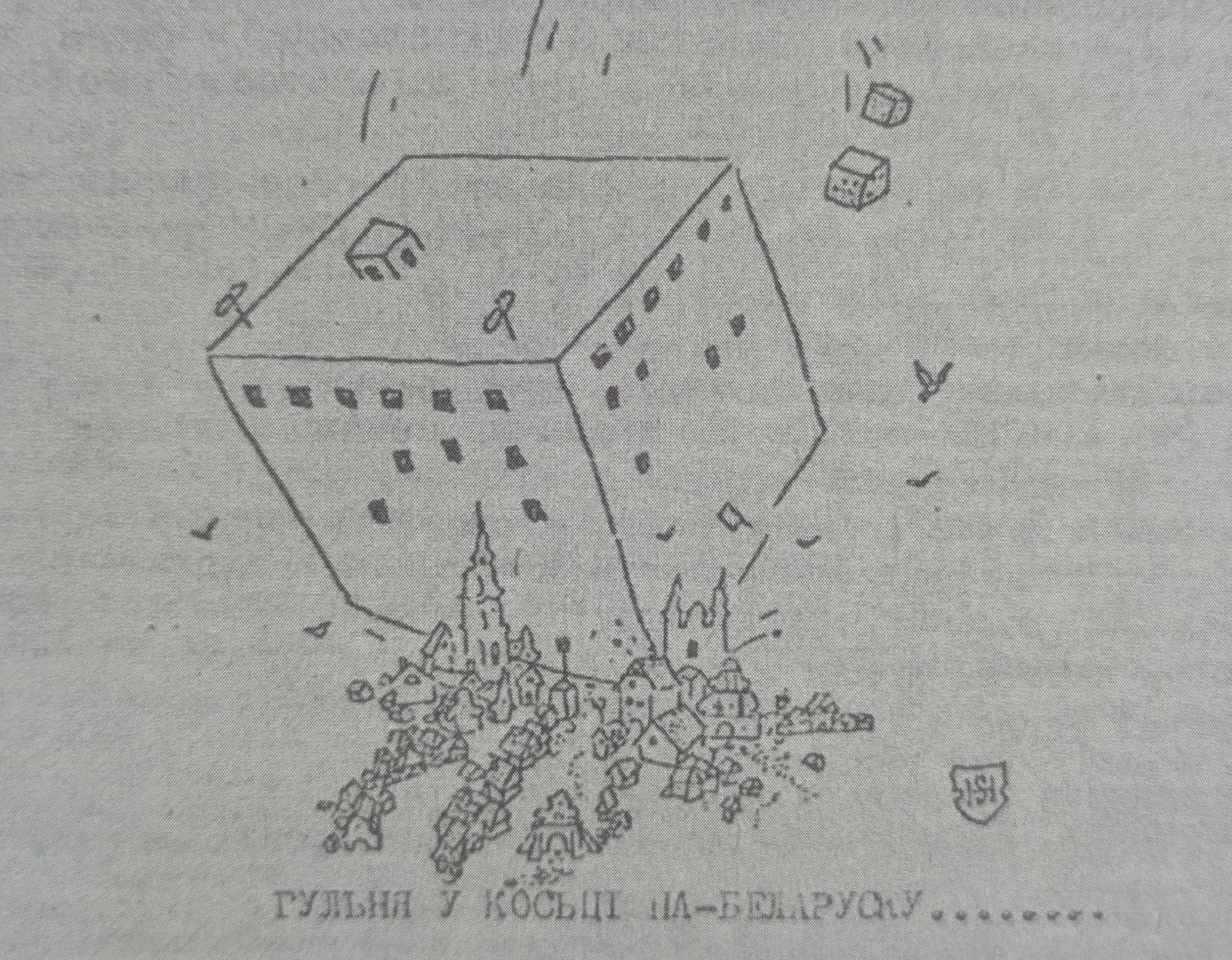
Simultaneously with his successful career in Moscow, Aliaksei Kaŭka was still a person who grew up in very poor conditions in a Belarusian village, whose Russian remained “somewhat shaky” (as later commentators of his uncensored text put it), whose roots were extremely important, and who, because of the very ambivalence of his position, acutely sensed the hierarchical structure of Soviet society as well as Soviet intelligentsia. Russian culture and language were necessarily on the top of this hierarchy, and all others were treated as secondary and insufficient. Kaŭka simultaneously observed the communality of concerns among non-Russian people across the Socialist block:
Among those visiting the BSSR [Belarusian Soviet Socialist Republic] a difference in views on the present position of the Byelorussian language can be observed between (on the one hand) Ukrainians, Poles, Czechs, Slovaks, and Bulgarians and (on the other hand) Russians (p. 34, original emphasis)
In an attempt to understand the roots of this cultural decline and to assert the right of the Belarusian people to preserve their language and identity, the author turns his attention to historical and epistemological injustices: How can a language and culture that have been suppressed and systematically marginalized for centuries compete with those of the hegemon? The result of such policies and practices of cultural discrimination is the gradual – and therefore largely invisible – ghettoization of the language. Confined to the spheres of literature and folklore, and removed from everyday communication, politics, industry, and technology, it loses its discursive agency, turning its speakers into speechless subjects.
From where was the “Wind of Change” blowing?
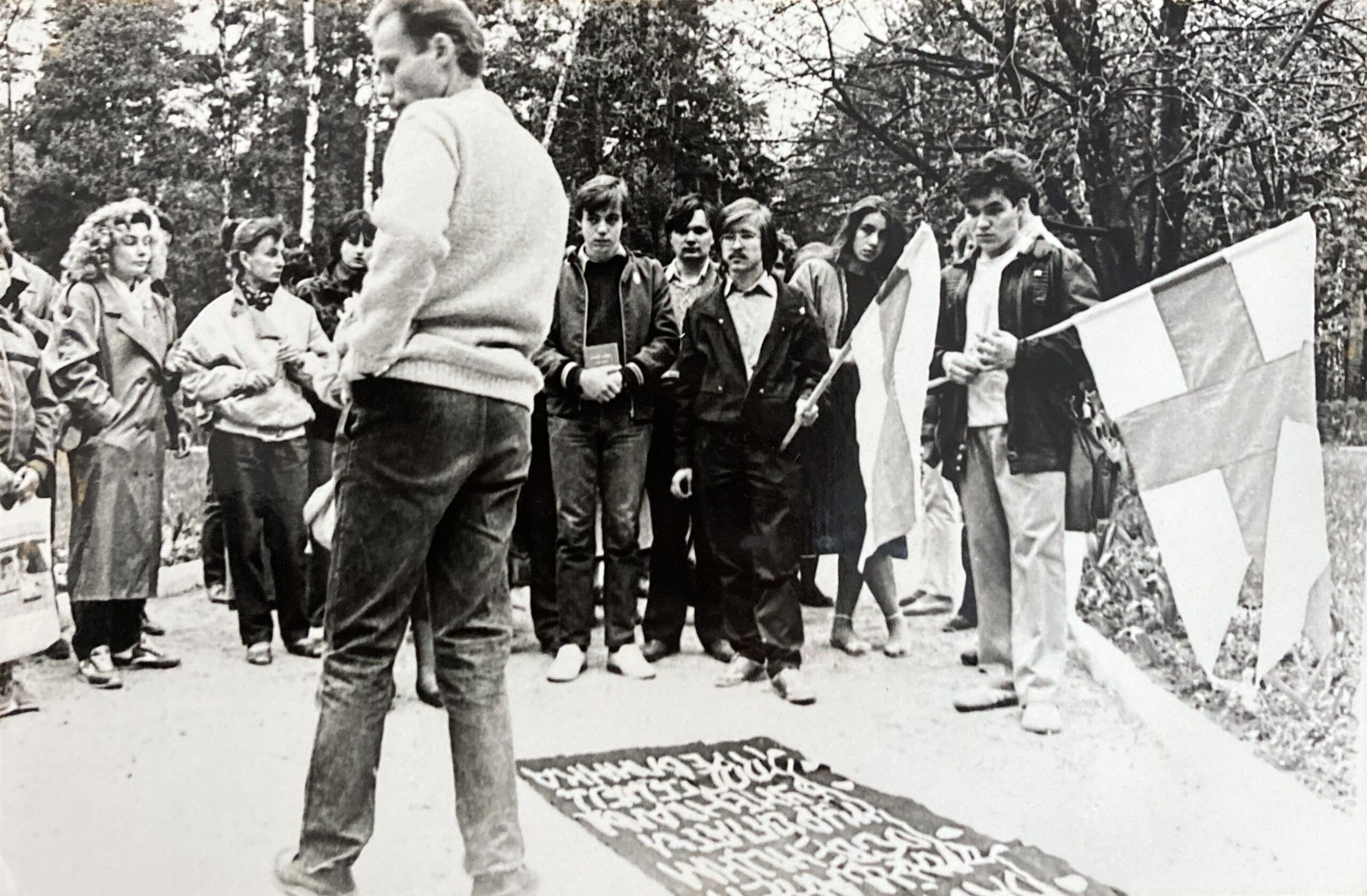
It was this actual injustice, discrimination, and even humiliation of local cultures and languages – in sharp contrast to the official declaration of equality – that drove the consolidation of the 1980s generation. Young people – women and men in almost equal numbers – born in the late 1950s and early 1960s succeeded in fundamentally reinterpreting the field of Belarusian culture and, in doing so, gradually became engaged in political debates. This was the generation that – according to the First Secretary of the Communist Party, Nikita Khrushchev – was supposed to live under communism but instead became fairly anti-Soviet. The emergence of this generation was certainly a result of rapid urbanization and modernization in post-war Belarus, but it was also shaped by the ubiquitous ideological fatigue so aptly described by the anthropologist Alexei Yurchak, no less than by the rise of the Solidarność movement in neighbouring Poland. This was, of course, not exclusively a Belarusian phenomenon – similar developments took place in Ukraine – but it brought about an extraordinary transformation of the Belarusian cultural and political landscape. Importantly, and similarly to Ukraine, Lithuania, Latvia, Estonia, this youth activism started to take shape in the early 1980s, quite a few years before political and ideological change was initiated in the Soviet Union.
Two events signalled the emergence of this generation asserted its right to intervene in intellectual and cultural life and, subsequently, politics: the founding of the first informal youth association “Maistroŭnia” (Workshop, 1979–1984) and the publication of the samizdat journal “Liustra Dzen” (Daily Mirror, 1979–1980). “Maistroŭnia” had emerged as an informal singing and theatre studio, yet from the very beginning it was supplemented by history lectures – and in smaller trusted circles – political discussions. “Liustra Dzen” was published by a group of youngsters hiding their names under the collective name of “Belaruskaia taleracyinaia hramada” (The Belarusian Society of Tolerance). As one of the publishers, linguist Vintsuk Viachorka (b. 1961), explained, they insisted on tolerance and diversity, positioning themselves in opposition to state-induced unity and monotony. On the first pages of the magazine, the publishers placed an anonymous poem, signed by “K.U.”, celebrating 410 years of the “Battle of Vorscha”:
The years have passed, yet still that time endures,
Its glory lives within Belarusian hearts.
No power can compel a people to submit,
Not even by depriving us of freedom!
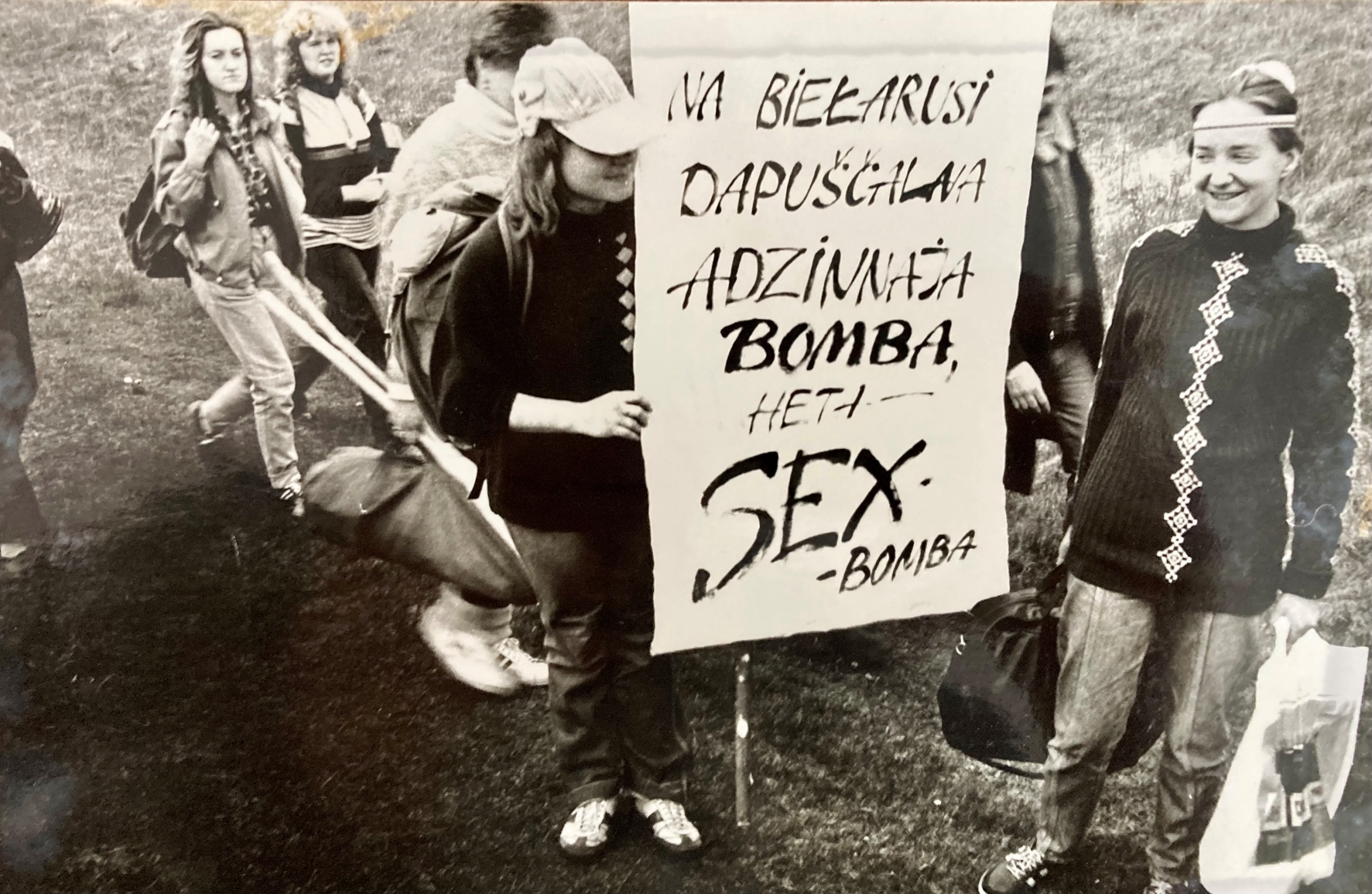
One fundamental element of this cultural shift was linguistic conversion: urban dwellers who had been raised, educated, and socialized in Russian suddenly switched to Belarusian, perceiving this transition as a form of protest against the suffocating greyness of Soviet life. Another was the return of previously banned names and the reclamation of forgotten chapters of history by means of historical research (Henadz Sahanovich, b. 1961), archaeology (Edward Zaikoŭski, 1952–2025), and archival (Volha Babkova, b. 1961) or literary studies (Ales Bialiatski, Piatro Vasiuchenka 1959–2019). Talking about Ukraine, the literary scholar Olena Haleta has described this as the “process of great re-reading”. Yet another was the reintegration of Belarusian culture into the trajectory of European modernity through literary and artistic experiments. These experiments often intermingled various artistic genres, as in the works of Ihar Babkoŭ (b.1964), Adam Hlobus (b.1958), Piatro Vasuchenka (1959–2019), Todar Kashkurevich (b.1963), Liavon Volski (b. 1965), Ludmila Rusava (1954–2010), and Mikhail Anempadystaŭ (1964–2018). Critical step was also to organize the process of translation of contemporary literary and scholarly works into the Belarusian language. Zmitser Kolas (b. 1956) was, for instance, the first to translate the books by Albert Camus, Jean-Paul Sartre and Eugen Ionescu – previously all of them were either unavailable or available only in Russian. In 1986, Siarhei Shupa (b.1961) and Liavon Barshcheŭski (b.1958) have created a translator’s club “Babylon” which defined a field of Belarusian-language publishing for the decades to come.
Perhaps for the first time in Belarusian cultural history, women emerged as the driving force behind a major intellectual transformation. In Ukraine, Oksana Zabuzhko and Salomia Pavlychko were some of the most outstanding intellectual voices of this generation. A much less known figure is Larysa Simakovich (b.1957), a gifted Belarusian musician and composer who brought together dozens of young people and introduced them to traditional Belarusian folk singing. Two young students, Karalina Matskevich (b.1966) and Iryna Dubianetskaia (b.1964), published the samizdat magazine “Uniia” (Union, editor Siarhei Ablameika, b. 1962). Presenting itself as a magazine for Greek Catholic youth, “Uniia” helped lay the foundations for new religious thinking in the still officially atheist environment of late Soviet Belarus. Another important but little-known figure was Tatsiana Sapach (1962–2010), an exceptional poet who later became a prominent journalist. Together with her husband, the journalist and publicist Siarhei Dubavets (b. 1959), she became one of the first chroniclers of her generation. Importantly, this intellectual awakening was not confined to Minsk. It extended to Homiel, Polatsk, Hrodna, Vitsebsk, and many other Belarusian cities and towns.
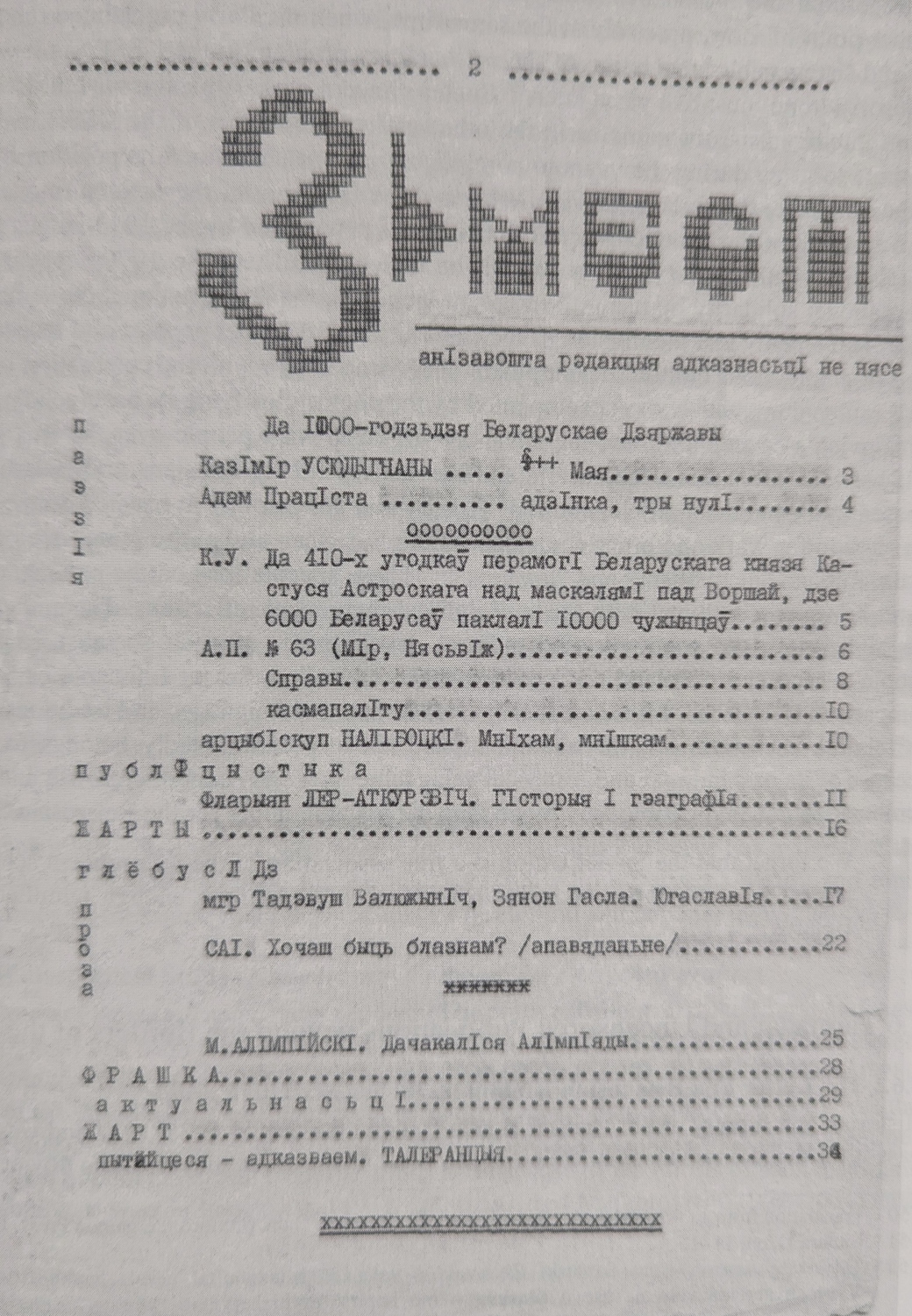
This cultural activism should be understood not simply as a form of cultural revival or resistance to Soviet nationality policies. It was also a process of learning how to self-organize, build solidarity, create communities, and develop alternative ways of thinking and producing knowledge. These skills proved invaluable when perestroika began just a few years later.
What we see, therefore, is a distinctive practice of dissent that emerged from below, rooted in concrete local initiatives well before perestroika and continuing beyond it. Rather than focusing only on this generation’s direct contribution to the emergence of political pluralism, it is equally important to recover the parallel reality they created alongside official politics. Their experience show how people navigated a period of profound political transformation – and how they had already begun to reshape their cultural landscape before that transformation became possible.
“History Repeats Itself All the Time”
This passage from Slavenka Drakulić’s “How We Survived Communism and Even Laughed” (1992) captures a bitter irony that has shaped Belarusian history for decades. Despite the collapse of the Soviet Union and the wave of democratic change that swept across Central Europe, Belarusians have continued – with scarcely any interruption – to live under and resist authoritarian rule, yet the continuity of this struggle has often been overlooked.
Perestroika reached Belarus later than many of its neighbours. Even during the country’s first years of independence, despite newly proclaimed freedoms and the introduction of democratic institutions, political power remained far from genuinely democratic. Nevertheless, those brief seven years (1988–1994) were enough for many Belarusians to internalize the conviction that individual and collective rights had to be actively defended.
It is little known that, starting from 1996, Belarusians repeatedly took to the streets in response to the authoritarian turn that began almost immediately after Aliaksandr Lukashenka came to power (1994). They protested against political repression, social injustice, and efforts to undermine Belarusian sovereignty by drawing the country ever more closely into Russia’s orbit. From this perspective, the question of how to resist authoritarian rule never entirely disappeared from the Belarusian political imagination after the Second World War. In fact, it is possible to trace a continuity between Soviet-era dissent and the forms of civic resistance that emerged in the post-Soviet period.
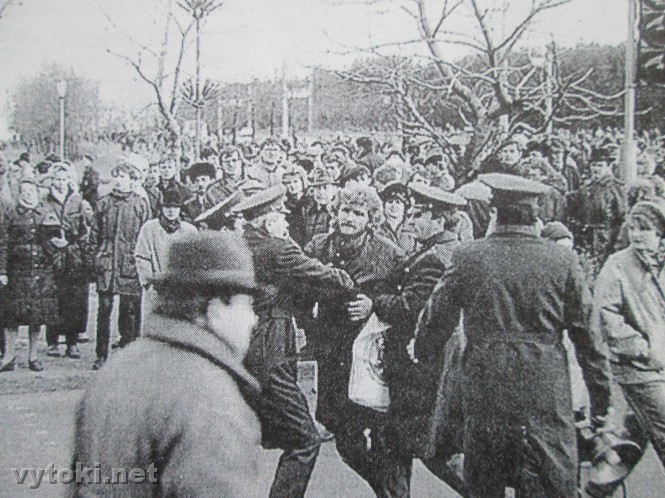
Few individuals embody this continuity more clearly than the literary critic, essayist, human rights defender, and 2022 Nobel Peace Prize laureate Ales Bialiatski. His life and work, discussed in the final part of this essay, illustrate how the ethos of dissent developed across the Soviet and post-Soviet eras. Bialiatski was involved in samizdat publishing in the 1980s; he organized one of the first peaceful public protest rallies in Minsk in 1988; he was among the first to oppose the Lukashenka regime from 1996 onward, also founding the “Viasna”(Spring) human rights centre. For this activity, he was regularly persecuted and twice imprisoned by the Lukashenka regime in 2011–2014 and 2021–2025. He started to collect and archive the history of dissent and samizdat in Soviet Belarus. Bialiatski and his counterparts formulated a clear vision that it was primarily in the field of culture that they would win or lose the battle for the political existence of the Belarusian nation – a vision that continues to define his work today.
In the late 1970s, at the very young age of 19, when Bialiatski was a student of philology of Homiel State University, He realized that in order to bring change into society on has to start small. Bialiatski invested his energy and communication talent into building and sustaining communities of like-minded people around him. His and his circle’s first concern was to popularize the use and consumption of Belarusian language and culture.
In late socialist Belarus, all human rights organizations were illegal, but this was quickly challenged under the new conditions. By the mid-1990s – as hopes for democratic transition remained high across much of Eastern Europe – the Belarusian regime was already establishing repressive mechanisms that would expand in the years to come. One of the oldest human rights organizations in Belarus, Viasna (Spring), was founded by Ales Bialiatski in 1996 in Minsk, he was then a city council member and a director of the local literary museum. The spring of 1996 also saw the first large-scale protests against Lukashenka’s regime, which were violently suppressed.
In the historiography of Soviet and socialist dissent, organized human rights activism is often regarded as the starting point of dissident movements. In Bialiatski’s case, however, the founding of Viasna was not the beginning but the culmination of his cultural and political work – a product of his unique ability to unite people and mobilize them for a common cause, with the national and cultural revival of Belarus as a central focus. For Bialiatski and his colleagues, the struggle for cultural and national expression has been inseparable from political and human rights activism since the early 1980s. This dual struggle remains a defining feature of post-Soviet societies, where both political and cultural agency have long been suppressed.
Viasna had its official status revoked in 2003 but has continued to operate semi-legally in Belarus, largely due to the networks and infrastructure it (and other human rights organizations) developed; civic society was able to respond in a consolidated way to the unprecedented repression that began in 2020. This network continued to monitor the human rights situation in Belarus and help political prisoner and their families despite Bialiatski and several other of his colleagues were detained in Summer 2021.
In December 2025, before Bialiatski’s release and forceful expatriation from the country, he was one of 1,257 political prisoners in Belarus, while tens of thousands have faced persecution in politically motivated cases – a huge number for a small country like Belarus, which – as of now – has a population of less than 9 million.
Conclusion
Images of the mass protests, of Belarusian revolution in 2020— widely circulated in the press and these events attracted also a broad scholarly interest. And these protests certainly marked a turning point for dissent. For many, they represented the moment when Belarusians came together as a civic nation, unified in opposition to the regime. While these protests were unprecedented in scale and duration, it is also forgotten that also rooted in earlier practices and ideas of dissent. As historian Michal Kopeček observed recently legacy of communism and anti-communist resistance significantly shaped debates and ideological cleavages in the subsequent decades and therefore it should be taken into consideration. Also, the practices and ideas of dissent we observe today in Belarus resemble those we know from Soviet and East European history. This is all the more striking given the limited place these histories have until now occupied in Belarusian collective memory.
Simultaneously, the language and practices of resistance in Belarus today also differs in significant respects. The difference we observe today can be, primarily, explained, but this is due, to the much greater scale of violence and the rapid digitalization of both resistance and repression. It also reflects the specific historical experience of Belarus. State violence and oppression originate not only from within the state but also from outside it. Much like during the imperial and Soviet periods, Russia continues to interfere heavily in Belarusian affairs, creating a persistent need to reclaim political subjectivity and pursue cultural and national emancipation alongside the struggle for human rights.
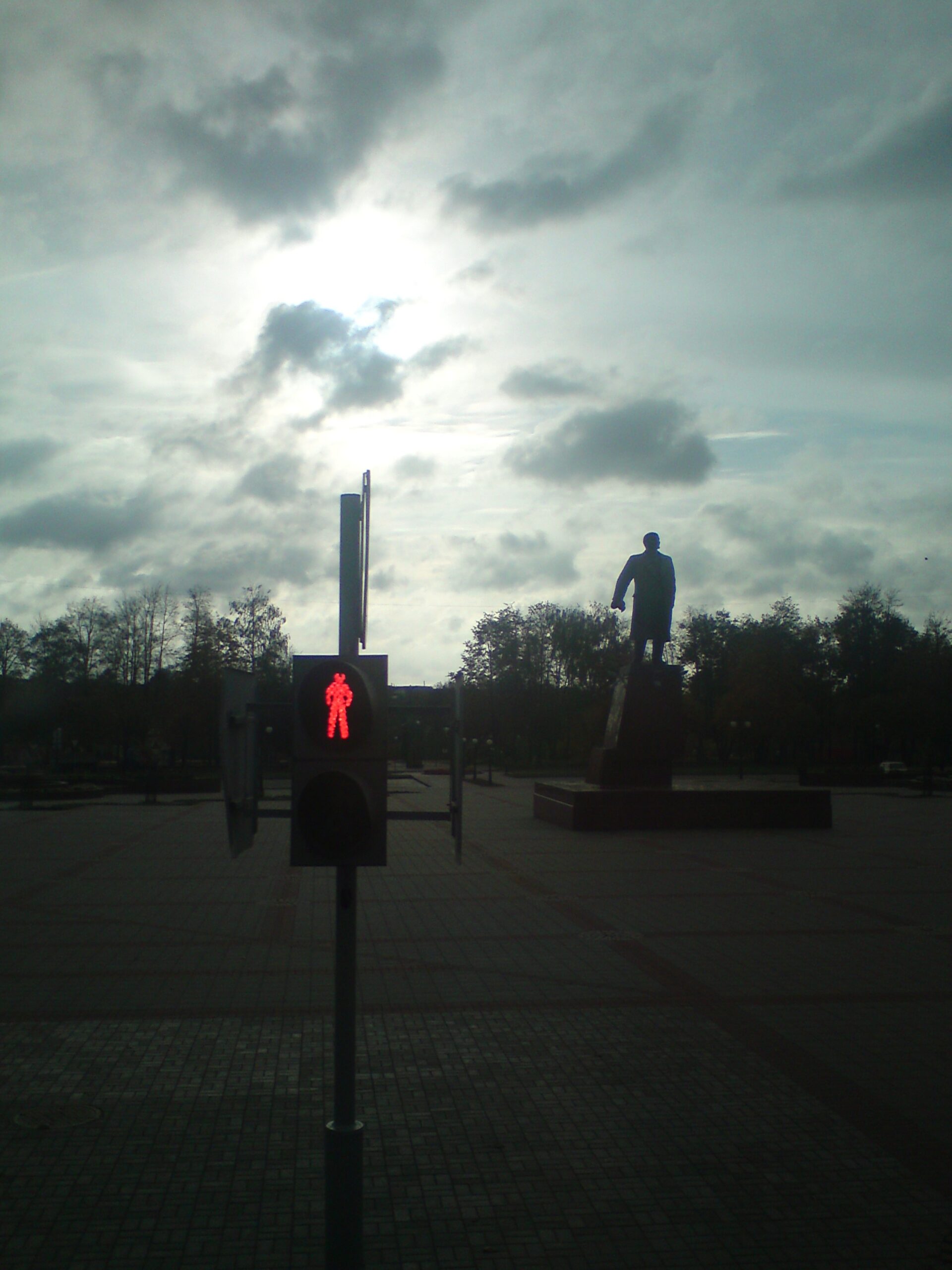
At the same time, the events of 2020 and 2022 in Belarus and beyond seem to compel us to reconsider the history of Central and Eastern European dissent as it has been narrated so far. Today, tens of thousands of people have become dissidents and have faced repression – an intensity of violence unprecedented in the postwar Soviet period.
Tatsiana Astrouskaya (PhD) is a research fellow at the Herder Institute for Historical Research on East Central Europe in Marburg and teaches Digital History at the University of Giessen. She is the author of the award-winning book: Cultural Dissent in Soviet Belarus: Intelligentsia, Samizdat, and Nonconformist Discourses (1968–1988) (Harrassowitz, 2019, further editions 2022, 2025). Her research focuses on the history of cultural and political dissent, memory politics, and digital transformation in the post-socialist space.
Bibliography and sources:
Artsimovich, Tatsiana (Tania Arcimovich). “We Are Like the Foremothers”: Traces of the Avant-gardes in Soviet Belarus. Dissertation submitted for the degree of Doctor of Philosophy, Faculty 05 (Language, Literature, Culture), Justus Liebig University Giessen, 2023. https://jlupub.ub.uni-giessen.de/server/api/core/bitstreams/11661230-ae77-4ae6-a864-0d8bc94e7796/content?utm_source=chatgpt.com.
Astrouskaya, Tatsiana, and Anton Liavitski. “The Phenomenon of Culture Is the Phenomenon of Bread”: The Debate on Culture in Belarus (1988–1991). Baltic Journal of Art History 19 (2020): pp. 101–128. https://doi.org/10.12697/BJAH.2020.19.04.
Astrouskaya, Tatsiana. Cultural Dissent in Soviet Belarus (1968–1988): Intelligentsia, Samizdat and Nonconformist Discourses. Wiesbaden: Harrassowitz Verlag, 2019.
Astrouskaya, Tatsiana. “Belarusian Underground Culture”. In The Oxford Handbook of Soviet Underground Culture, edited by Mark Lipovetsky and others, pp, 332–353. Oxford: Oxford University Press, 2024.
Astrouskaya, Tatsiana. Belarus as a “Cultural Parallel to Colonial Africa” or an Anti-Colonial Uprising of the Communist Aliaksei Kaŭka, Topos 2(2025), pp. 36–68.
Bialiatski, Ales. Ales. Polatskia labirynty, 2022.
Bialiatski, Ales. Irtutnae srebra zhytstsia. Natatki pravaabarontsy. Mensk, 2014.
Bykau, Wassil. Długa droga do domu, transl. by Joanna Bernatowicz. Kolegium Europy Wschodniej, 2024.
Henijuš, Larysa. Spiritus falt ubi vult. London&Vilnius: Skaryna Press, 2026.
Dubavets, Siarhei. Maistroŭnia: Historyia adnaho tsudu [Workshop: The Story of a Miracle]. N.p.: Radyjo Svaboda, 2012.
Drakulić, Slavenka. How We Survived Communism and Even Laughed. W.W. Norton, 1992.
Dubavets, Siarhei, comp. Tuteyšyja: Tvorčaść siabroŭ tavarystva [The Locals: Works by Members of the Association]. Minsk: Mastackaja litaratura, 1989.
Dubavets, Siarhei. Zanzibar: Stalenne maladoi dushy [Zanzibar: The Formation of a Young Soul]. Prague: Vesna, 2024.
Dziuba, Ivan. Internationalism or Russification? A Study in the Soviet Nationalities Problem. Translated from the Ukrainian. Edited by M. Davies. Preface by Peter Archer. London: Weidenfeld & Nicolson, 1968.
“Jak i 500 hadoŭ tamu, praŭda i spraviadlivasć na našym baku”: Sviatlana Tsikhanouskaya da Dnia Vajskovaj Slavy [“As 500 Years Ago, Truth and Justice Are on Our Side”: Sviatlana Tsikhanouskaya on the Day of Military Glory]. https://tsikhanouskaya.org/be/news/yak-i-500-gadou-tamu-prauda-i-spravyadlivasc-na-nashym-baku-svyatlana-cixanouskaya-da-dnya-vajskovaj-slavy.html. Accessed Mai 10, 2026
Haleta, Olena. Vid antolohii do ontolohii: Antolohiia yak sposib reprezentatsii ukrainskoi literatury kintsia XIX – pochatku XXI stolittia [From Anthology to Ontology: The Anthology as a Means of Representing Ukrainian Literature from the Late Nineteenth to the Early Twenty-First Century]. Smoloskyp, 2015.
Interview of Tatsiana Astrouskaya with Vintsuk Viachorka, February 9, 2026.
Interview of Tatsiana Astrouskaya with Siarhei Dubavets, April 11, 2026.
Interview of Tatsiana Astrouskaya with Siarhei Shupa, January 20, 2026.
Kopeček, Michal. “Dissident Legalism: Human Rights, Socialist Legality, and the Birth of Legal Resistance in the 1970s Democratic Opposition in Czechoslovakia and Poland”. Making Sense of Dictatorship: Domination and Everyday Life in East Central Europe after 1945, edited by Celia Donert, Ana Kladnik and Martin Sabrow, Budapest, Hungary: Central European University Press, 2022, pp. 241-270.
Letter to a Russian Friend. A ‘Samizdat’ Publication from Soviet Byelorussia (1979) London: The Association of Byelorussians of Great Britain.
Liustra Dzen [Daily Mirror], 1980 [n.p., n.p], https://vytoki.net/?years=1980&post_type=docs. Accessed July 14, 2026.
Unia [Union], Minsk, 1990–1995, https://knihi.com/none/Unija_pdf.zip.html#u1.pdf_. Accessed July 14, 2026.
Vytoki. Hramadzki web-arkhiŭ [Roots. The public web archive]. https://vytoki.net. Accessed May 9, 2026
Yurchak, Alexei. Everything Was Forever, Until It Was No More: The Last Soviet Generation. Princeton, NJ: Princeton University Press, 2006
“Zmitser Kolas.” Palitviazni i represavanyia ŭ Belarusi [Political Prisoners and Repressed in Belarus]. Human Rights Center Viasna, https://prisoners.spring96.org/be/person/zmicer-kolas. Accessed 24 July 2026.