


World War II separated numerous families, many of them forever. Such a fate befell the Owsiany family from the vicinity of Nowogródek. The Owsiany’s oldest son, Józef, after escaping from Siberia, went on to spend most of his life alone in the antipodes. Until the end of his life he was convinced that none of his loved ones had survived the hardships of deportation.
Józef was a polish soldier defending Poland during the German Invasion in 1939 and was a Siberian exile. He was born on May the 25th, 1909 in the town of Wsielub near Nowogródek. He was the son of Wincenty Owsiany and Stefania née Żurawiel. His father worked in a forester’s lodge named Teofilin, which was located on the estate of Count Karol Marian O’Rourke. His mother looked after the house. When Wincenty began to fall ill, it was Józef’s role, as the oldest of the ten siblings, to take over the duties as a forester and support the family.
After military mobilization was announced in March 1939, Józef and his brother Mieczysław joined the army: Józef in the 79th Infantry Regiment in Slonim, and Mieczysław in the 20th Light Artillery Regiment in Baranowicze. Both brothers fought in the Polish Defensive War of 1939 during the outbreak of the conflict. After it ended, Józef returned home in early November. No more was ever heard of Mieczysław.
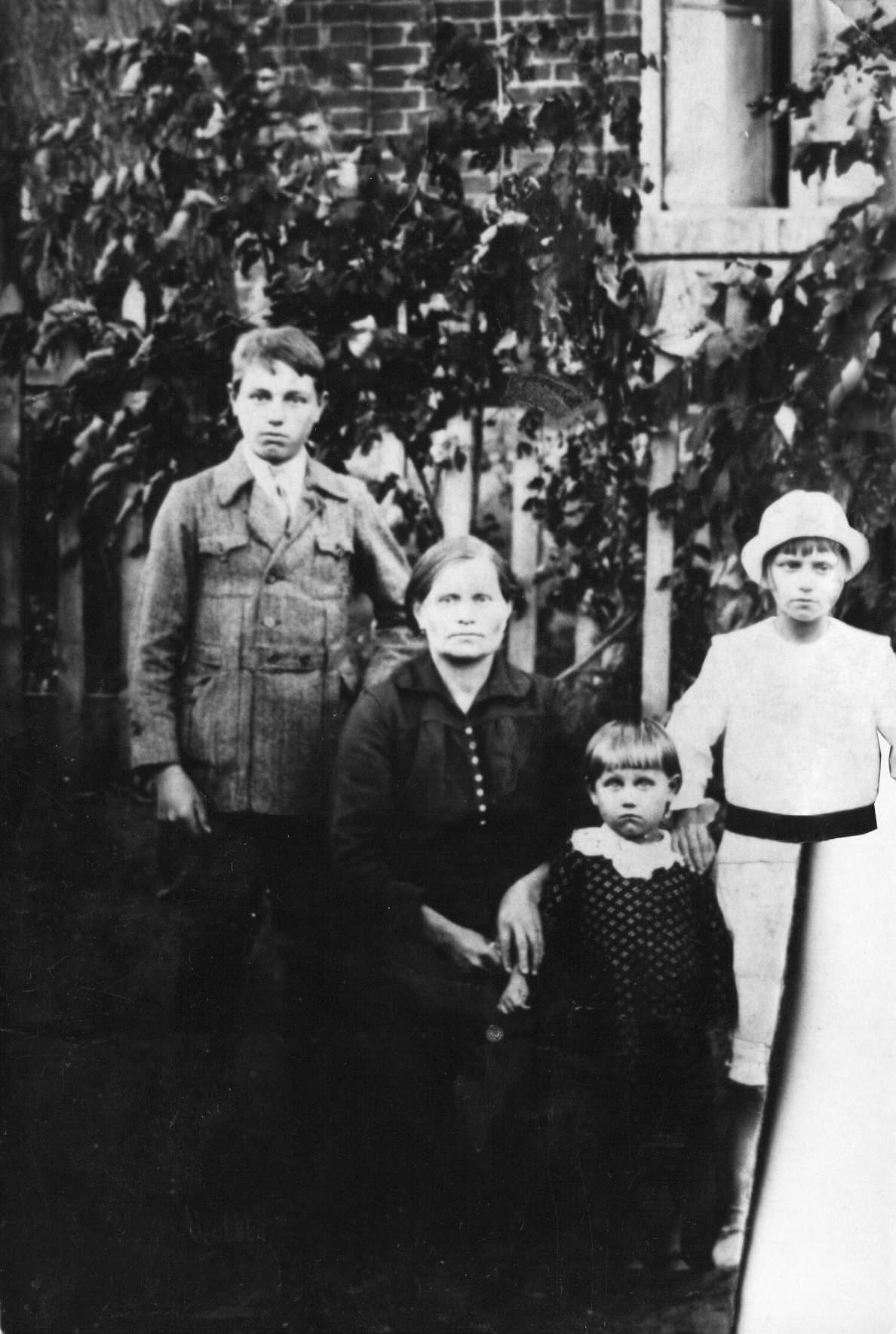
On February the 10th, 1940, the Owsiany family (Wincenty with Stefania and Józef’s siblings: Jan, Henryk, Stanislaw, Helena, Teresa and Jadwiga) were deported to Siberia in the first mass deportation. Only two sisters, Maria and Janina, avoided deportation, as by that time they were already married and did not reside in the family home, although they remained in Wsielub.
Joseph in a gamekeeper’s uniform. He was in service at the manor of the Earl of O’Rourke in Vsielub. He took over as forester from his father Wincenty.
The Owsiany family was sent to the special settlement Bojca in the Vologda region (in the northern European part of the Soviet Union). Like other deportees, they lived in very difficult conditions: they could barely fit (nine people!) in one tiny room, separated by boards from their neighbors (a large group of other deportees were housed in the same wooden barrack). To sleep at night, they had to set up bunk beds for the night, which were folded down during the day – otherwise it would have been impossible to move in such a cramped “room”. Whoever was able, had to work in the taiga forest cutting down trees. Even Jan, then only 14 years old, preferred to work rather than go to school, as working meant a larger ration of bread. It did not matter that this work was very grueling – the work brigades of several people were assigned a strict daily work quota to perform, regardless of them having no prior experience in logging work in comparison to many of the deportees. In addition, it was sometimes necessary to cover many kilometers to reach the logging site, carrying work tools with them, trudging through deep snow in winter, even working in temperatures as low as minus 30 degrees Celsius.
In 1943, the family heard that Colonel Zygmunt Berling had initiated the formation of a Polish army in the Soviet Union. Jozef and Jan went straight from the taiga into the army and were sent off to the front. Jan reached Berlin, being in the ranks of the so-called Berling’s Army, after the war returning to Poland.
On the contrary, Józef was taken into German captivity in 1944. As a prisoner of war, he was incarcerated in Camp X B Sandbostel in northwestern Germany. After the camp was liberated by British troops (April the 29th, 1945), Józef was transferred to a transit camp in Marx near Wittmund (Lower Saxony). He was never to return to Poland: he was convinced that his loved ones had perished in Siberia, and secondly, his homeland had been incorporated into the USSR after the war. A return to his native land was therefore impossible. Thus, he made the decision to emigrate. However, he was not to find happiness in the world.
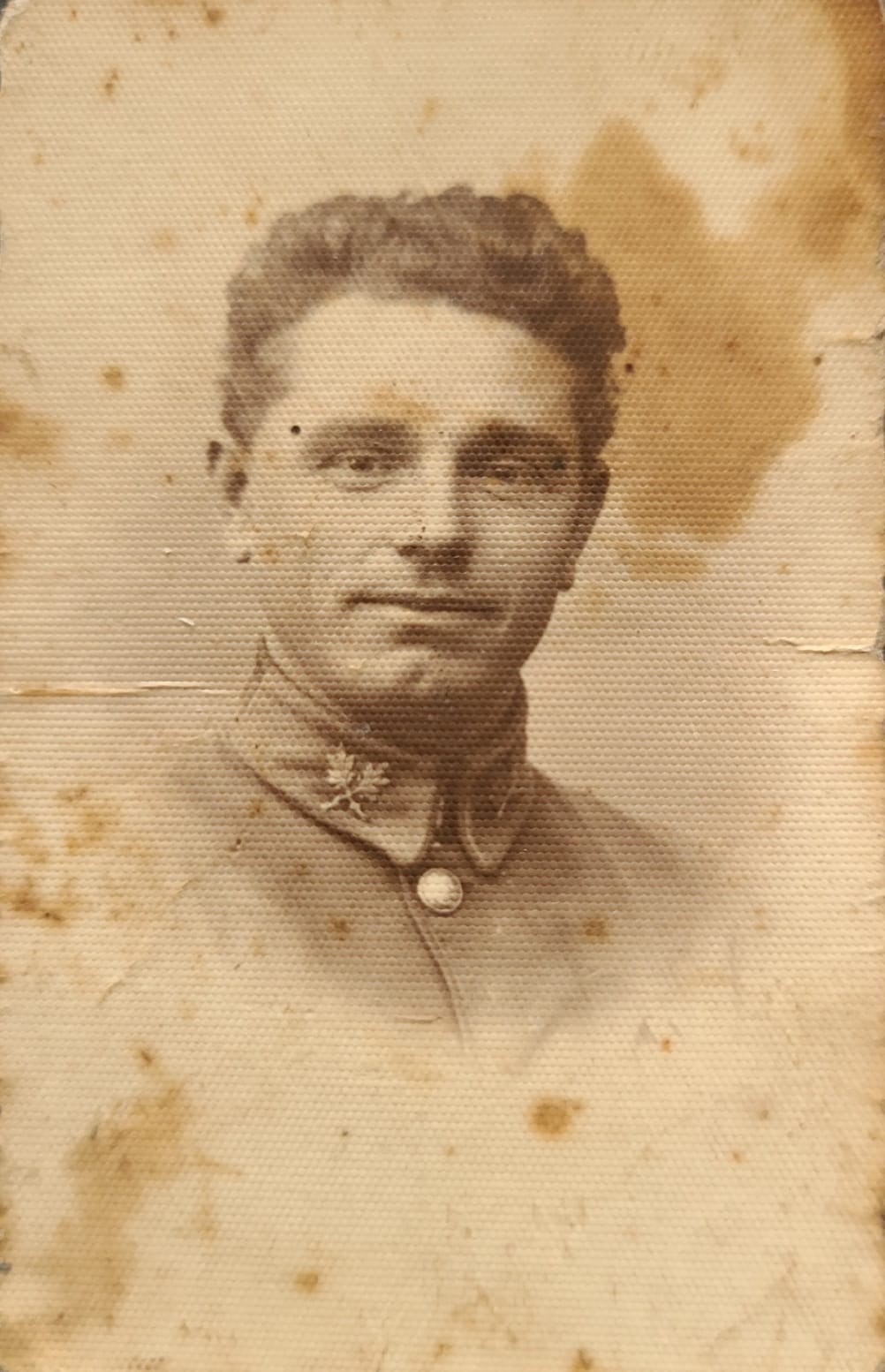
In late 1949 Józef Owsiany found himself in Australia. He was once again sent to a camp, this time for refugees, called Bonegilla. As a result of a wound he had sustained in the war, he lost his leg. With no chance of finding work and being completely alone, he found himself in a dramatic situation. Luckily, a family named Nanos took him in and cared for him and even when Józef’s guardians relocated in 1970, they continued to take an active interest in his fate.
Józef remained in Australia for the rest of his life, living alone. As he became seriously ill in his later years, in March of 1980 he was placed in a nursing home run by the charity Melbourne City Mission. He was the longest-living resident there. Years later, complications from the amputation of his leg recurred, resulting in the loss of his other leg.
Józef Owsiany died on the 19th of April 1996 and was buried in Fawkner Memorial Park Cemetery in Melbourne. A few graves away his benefactors, Mr and Mrs. Nanos and their daughter, are buried. His other daughter, Roula Nanos, who now works as a volunteer with the Australian Red Cross, remembers Józef from years ago, when she was a child. She and her father visited him regularly when he was already living in a nursing home. After growing up, Roula became a social worker and continued to care for Józef. Her parents had come to know Józef’s life story because he had shared the details of his past with them, being the only people he had told about it. Until his last days, Józef was unaware of what had happened to his relatives – they did not have any clue about his fate. After the war the Owsiany family returned from Siberia to Poland. Not all of them made it, as Stefania had died on the way back and was buried somewhere in the Soviet Union. Wincenty and his children settled in Kotla near Głogów. For years, the whole family searched for Józef and Mieczysław without success. It was all in vain. Almost 80 years came to pass before, as a result of renewed searches (queries in the Arolsen Archives, the POW Museum in Opole, the National Archives in Australia, among others), the relatives came to learn of Józef’s fate and discovered his grave in the cemetery in Melbourne.

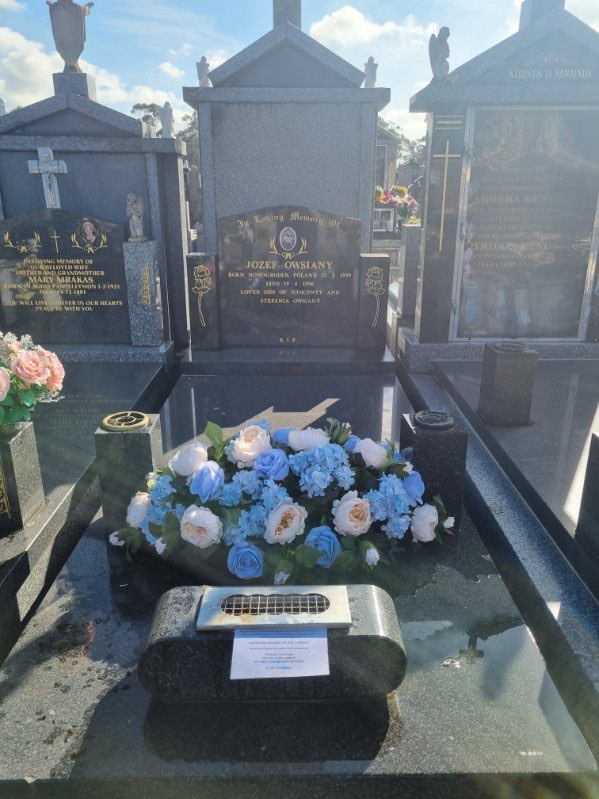
Through our portal, Marlena Owsiany-Jędrych, the granddaughter of one of Józef’s brothers – Henryk – would like to express her heartfelt thanks to Roula Nanos and her family, who took care of Józef until his death and buried him with dignity; as well as to Regina Chojna from the Prisoners of War Museum in Opole, who helped find Józef, Aleksandra Wysocka from the Polish Embassy in Sydney and Agnieszka Koźmic, who lives in Melbourne and helped find all the documents concerning Józef and determine his fate.
Compiled by: Anna Pyżewska
Photographs from the collection of Marlena Owsiany-Jędrych.