


“Barbarossa”
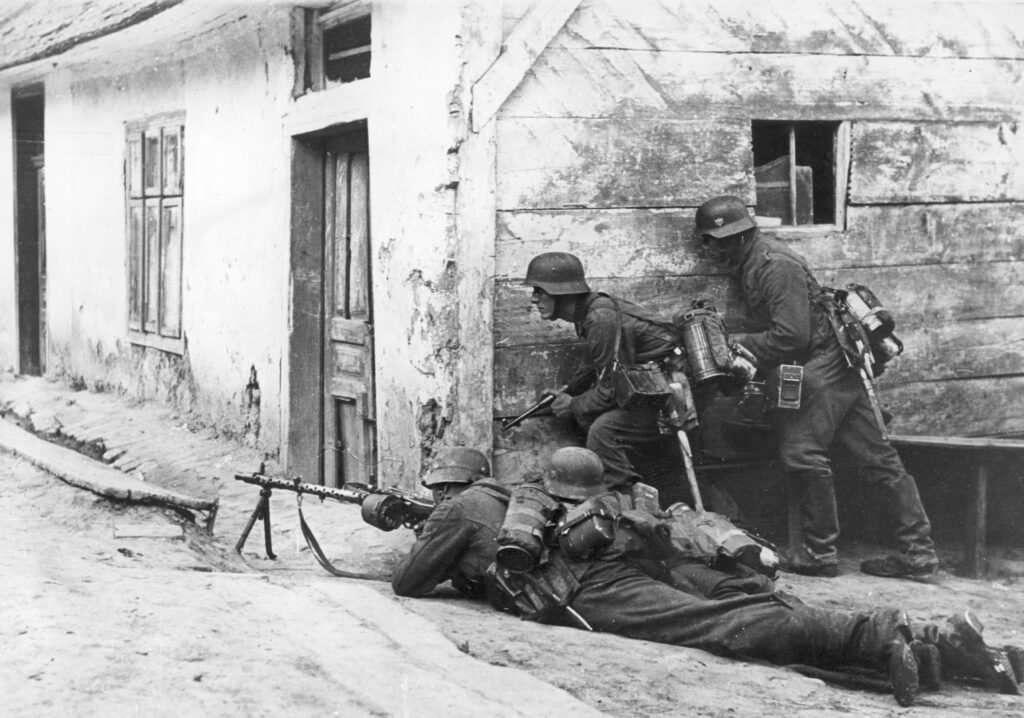
On the 22nd of June 1941, at 3:15 a.m., the first bombs fell and bullets flew at the Soviet Union in this war. The attack came from Stalin’s existing ally – Germany. The Wehrmacht had begun to implement “Barbarossa”– the plan for an attack on the Soviets. On this summer night the alliance of the two totalitarian states came to an end. The cooperation, that had been established less than two years earlier, turned out to be only temporary. Both sides had been aware for a long time that open warfare between them was only a matter of time…
However, when that moment arrived, it turned out that the Soviets were completely taken by surprise. The Red Army began a rapid retreat to the east. In the summer of 1941, the German Blitzkrieg proved effective again. The Soviet authorities, headed by Stalin, were just as surprised as the Red Army soldiers who suddenly came under fire. The Kremlin quickly realized that the Germans could not be stopped single-handedly. A new ally was needed.
Bestiality, death… and new hope
The German aggression against the Soviet Union brought death to millions of people in the following months and years. Soviet terror was being replaced with the German variant, and communist ideology by the Nazi’s own ideology. Paradoxically however, the tragic situation of the Soviet Union and its citizens also meant that there was a chance to save tens of thousands of people.
And it was those Polish citizens who in the years 1939-1941 had come to the Soviet Union as deportees, prisoners of forced labour camps, prisoners of war or soldiers forcefully conscripted into the Red Army. Their fate was now dependent on the development of the international situation.
Great Britain came to be the new ally of the Soviet Union. However, in order to establish cooperation between Moscow and London, an agreement had to be concluded between the new friend of the British Crown and Poland – the country which was an experienced ally of the United Kingdom.
The official agreement was signed over a month after the outbreak of the German-Soviet war, on the 30th of July 1941. Polish citizens were to regain their freedom and were given the opportunity to join the Polish army under the command of General Władysław Anders. A year later, most of them left the “inhuman land” and headed to Italy as the 2nd Polish Corps and joined the fight against the Germans or, they ended up as civilians in many countries of the world (including India, Mexico or New Zealand) in camps specially prepared for Polish refugees.
There are more consequences
Undoubtedly, the events of the summer of 1941 enabled the creation of another Polish “Siberian” army in the spring of 1943, this time under the command of General Zygmunt Berling. It has not gone unnoticed that the 22nd of June 1941 led to Germany’s final defeat in the war, but at the same time to the spread of Soviet influence over half of post-war Europe. To this day, the full consequences of this event are impossible to measure.
To say that the 22nd of June 1941 was a turning point in the course of the war is an understatement. The moment of German aggression influenced not only millions of Soviet citizens of and thousands of Siberian Exiles, but all of us as well.