


The paradise of her childhood was Nieśwież, today a town of around 15,000 inhabitants in Belarus, but back then – before the Second World War – it was a county town on the border of the Second Polish Republic, in the Nowogródek Province. Though she was brutally torn away from that paradise by the Soviets, she always came back there.
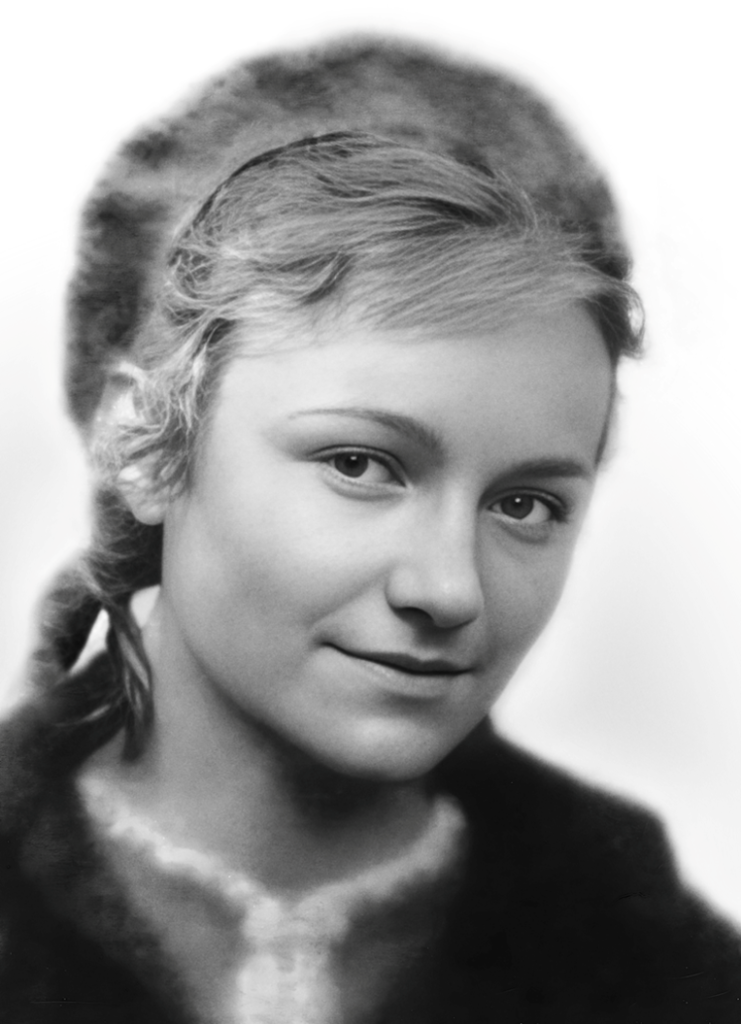
Stanisława was born in Nieśwież (on 27 May 1930), however her father Jan did not come from the Eastern Borderlands, but from the Tarnów region. He was born in the village of Żukowice Nowe on 4 January 1902 – at least this is the date given in official documents, although the year 1900 appears as his date of birth on Jan’s symbolic grave at the Municipal Cemetary in Krzyż.
Happiness Interrupted by Tragedy
As a young, 17-year-old boy, Jan Wiatr escaped from home to fight in Polish-Soviet war. At the age of 23 he joined the State Police and studied in the police academy in Nowogródek, after which he was posted to work in Nieśwież. There his newlywed wife Olga nee Kuryłło, when she was 22, she gave birth to a baby girl, whom her parents named Stasia. This was their only child.
In 1936, Jan was promoted to the rank of senior constable but the happy family life was interrupted by the war. After the Red Army’s invasion on Poland on 17 September 1939, Jan went off to war and was arrested by the Soviets at the railway station in Horodziej later that same day. All trace of himwas lost. It was only in a free Poland that Stanisława learnt that, in the spring of 1940, her father had been held in the prisoner-of-war camp in Ostashkov. The Soviets executed him between 17 and 21 April in Tver as part of the Katyn massacre, along with over 6,000 other prisoners of war. He was secretly buried in Mednoye.
The Soviet Government Evades Responsibility
On 13 April 1940, NKVD officers came to Olga and Stanisława Wiatr, just as they did to thousands of other families of the Katyn massacre victims, and ordered them to pack their belongings. The women were deported to Kazakhstan, to Ilinka kolkhoz in North Kazakhstan oblast.
Wacław Boguszewski form Nieśwież was also arrested in 1939 and sent to a labour camp. His family was likewise deported to Ilinka. Released from the camp after the Sikorski-Mayski Agreement, he managedto reunite with his family and later described the place as follows:
“The exiles from Nieśwież County were taken to the Ilinka kolkhoz and told to fend for themselves. They had to find shelter with local people, usually in exchange for services or help on the farm. (…) The community of Polish exiles consisted, with few exceptions, of single women or women with children. Some of their husbands had been officers; we knew nothing of their fate. One of the women in Ilinka knew our ambassador and asked him abouttheir fate. The ambassador merely informed her that the Soviet government was evading the question. (…) As a result, among around 20 Polish families in Ilinka, there were only two men– I was the third.”
W. Boguszewski, MEMORIES FROM 1939 –1944, IN: MEMOIRS OF SIBERIAN DEPORTEES , VOL. 5, WARSAW 1991, P. 174.
When Sybiraks Could Speak Again…
Olga and Stanisława returned from exile in 1946. Olga lived for another 13 years, although she suffered from seriously illness. She died in 1959 at the age of 51. Her daughter buried her at the Municipal Cemetery in Tarnów.
Stanisława completed her studies, married, and worked as a Russian-language teacher at a secondary school in Tarnów.
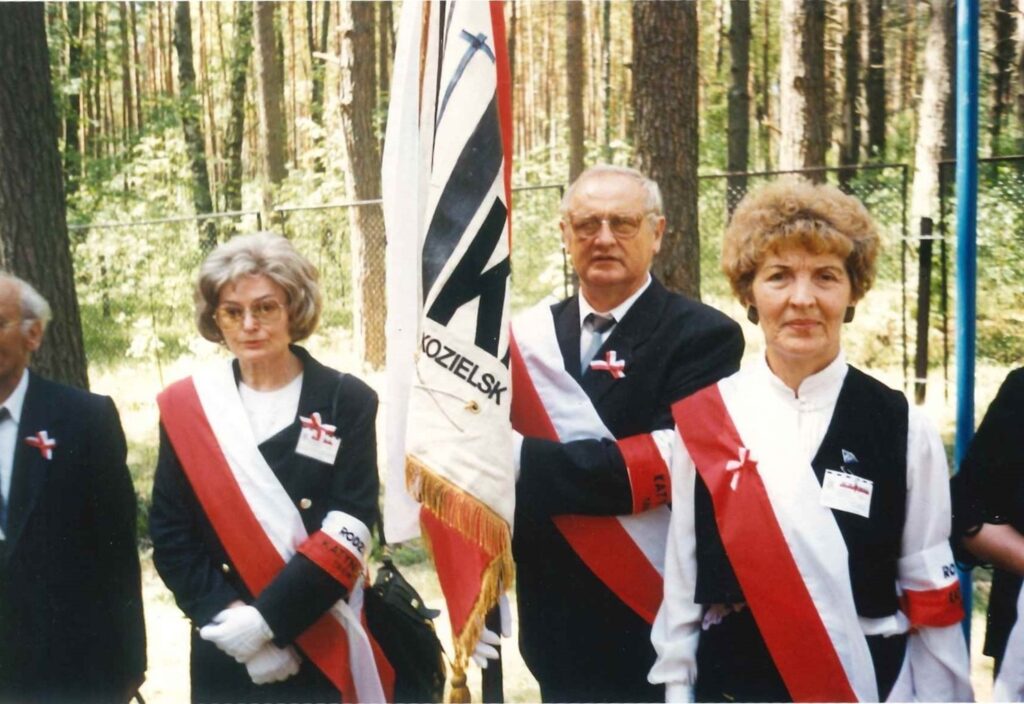
After the fall of communism in Poland, when Sybiraks could speak openly about both the deportations and the Katyń massacre, she became one of the first people in Tarnów to devote herself to raising awareness of Soviet repression. At that time, she founded a youth group called Sybiracy, with which she prepared patriotic performances and educational programmes. She also devoted much of her newly discovered poetic talent to recounting the tragedy of Sybir The following years of her life were dedicated to promoting knowledge about Sybir and the Katyn massacre. She delivered thousands of lectures to children, young people, teachers, clergy, and even prisoners. Between 1993 and 1997, she co-created around 200 radio broadcasts in the series Tobie Polsko [For You, Poland], aired on the diocesan radio station Dobra Nowina. She participated in educational workshops and in the ‘Patriotic Candlelit Evenings’ organised by the Archbishop Jerzy Ablewicz Catholic Intellectuals’ Club. She inspired literary, art and history competitions, interviews and meetings with witnesses to history, methodological materials for history lessons, and even a master’s thesis on the religiosity of the Sybiraks. Thanks to her initiative, a commemorative plaque and a monument dedicated to the Sybiraks were erected.
She immortalised her experiences in poems published in the collections Wormwood with a Drop of Dew, The Forgotten Melody, Ballad of a Lost Home, I’ll Tell You How It Was, as well as in numerous anthologies.
Serving Others
She was a long-standing member of the Tarnów branch of the Association of Siberian Deportees, serving as its chairwoman from 1995 and honorary chairwoman from 2007 onward. She also headed the local Association of Katyn Families. For many years, she cared for the members of both organisations and responded to their needs, striving to ensure they were recognised within the community and honoured withdistinctions appropriate to their achievements. On her initiative, an oak dedicated to Jan Wiatr was planted in Tarnów’s Avenue of Memorial Oaks.
She never forgot her hometown: ‘The memory of Nieśwież during my exile in Sybir gave me the strength to survive. Nieśwież embodied Poland. In a dark, cold dugout, late into the night, my mother would tell me stories about Nieśwież, and it was the most beautiful, never-ending fairy tale. And now I write and speak about it constantly – at meetings with young people, in clubs, and on every possible occasion. For me, it’s an enchanted city…” – she recalled in one of her interviews.
Nieśwież repaid her years later. The city authorities granted her honorary citizenship.
Stanisława Wiatr-Partyka died on 8 November 2023 and was laid to rest at the Municipal Cemetery in Krzyż.
She received numerous honours and distinctions, including the Gold Cross of Merit, the Medal of the National Education Commission, the Centenary of Regained Independence Medal, the Siberian Exiles’ Cross, and the Pro Memoria Medal. She was also the awarded the J. Mackiewicz Literary Prize in 2014.
On the plaque placed on her parents’ grave, Stanisława Wiatr-Partyka inscribed her poem:
…for He remained in the forest, and the forest is Katyn Forest, silent of birdsong
And the bells did not ring, and there was silence for half a century
And I am still searching for signs on earth and in the sky
And She wanders across the steppe, waiting and waiting…
Tłumaczenie z języka polskiego: Agnieszka Glińska (Muzeum Pamięci Sybiru).