

Bartłomiej Krzysztan
Death of an M.P
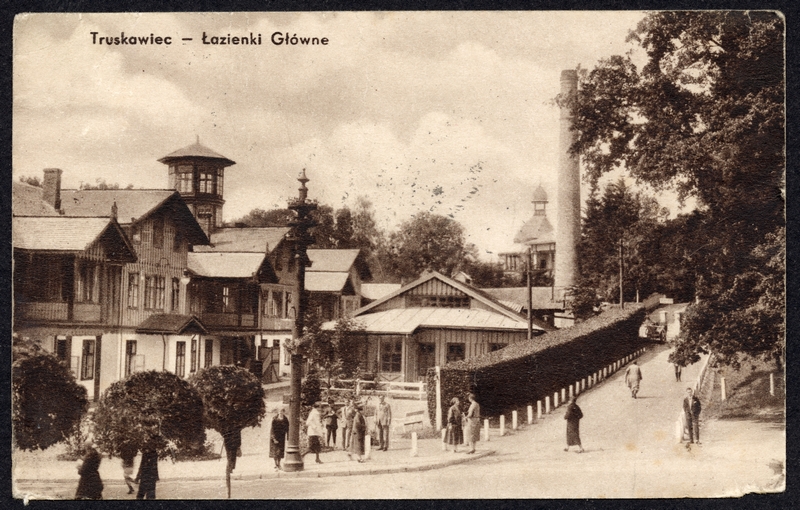
It was a stormy evening, on Saturday the 29th of August, 1931. For the best part of three weeks, member of parliament Tadeusz Hołówko had been a patient in Truskavets, well-known as a mineral spring health spa in the region of Bieszczady, which was at that time a part of the Lwów Voivodeship. Due to a significant weakening of his heart muscle, the doctor had recommended he stay there. Hołówko had been residing in a guesthouse run by Greek Catholic Basilian Sisters, which he might have done as a gesture of reconciliation toward the Ukrainian minority. Recalling his loneliness when writing to his wife, it seemed Tadeusz had been planning to leave Truskavets the following day. Just after 8 p.m. however, two armed men appeared at the door of his room. They unloaded their weapons, firing a total of six shots at him; causing wounds that would prove fatal.
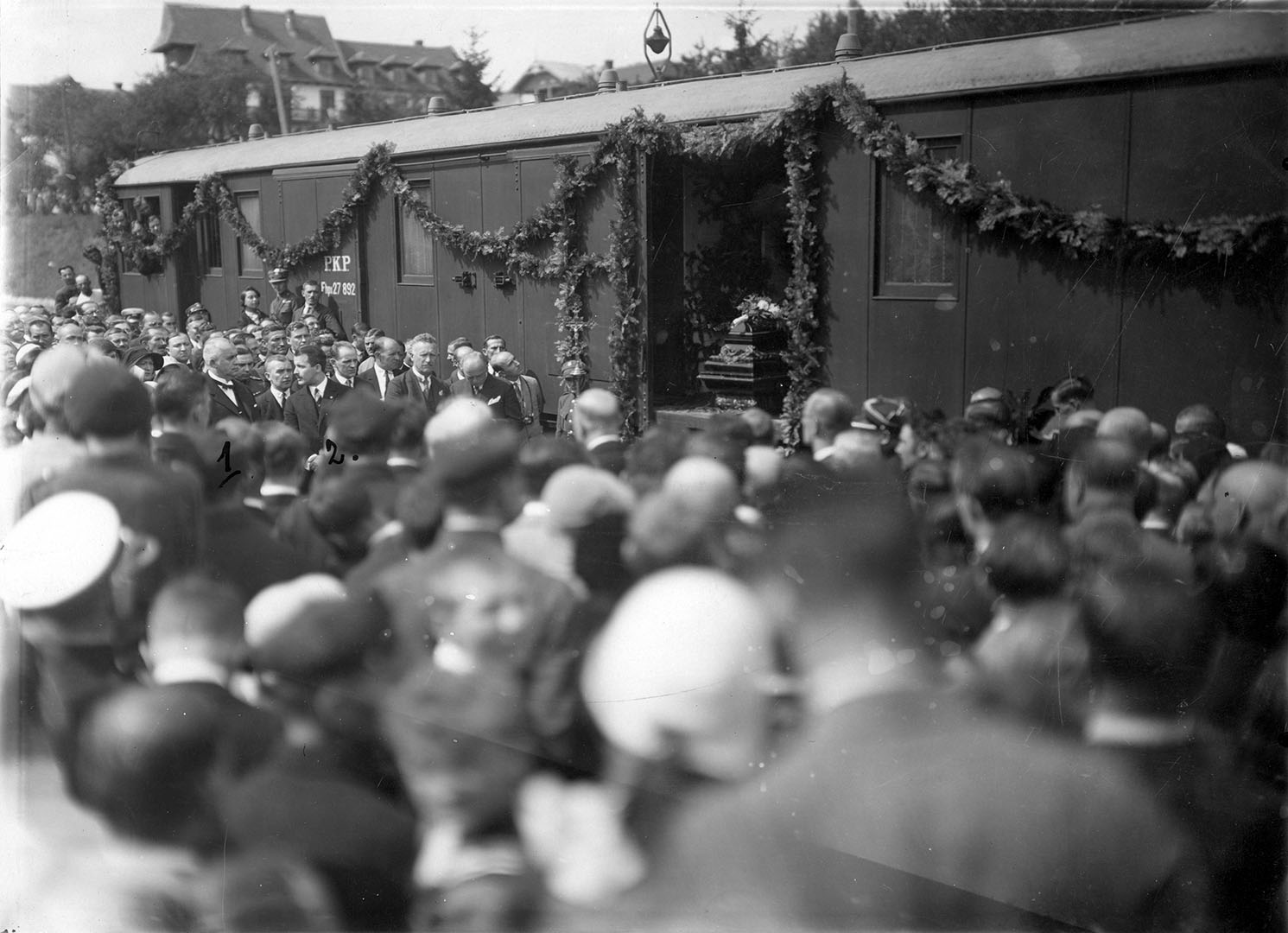
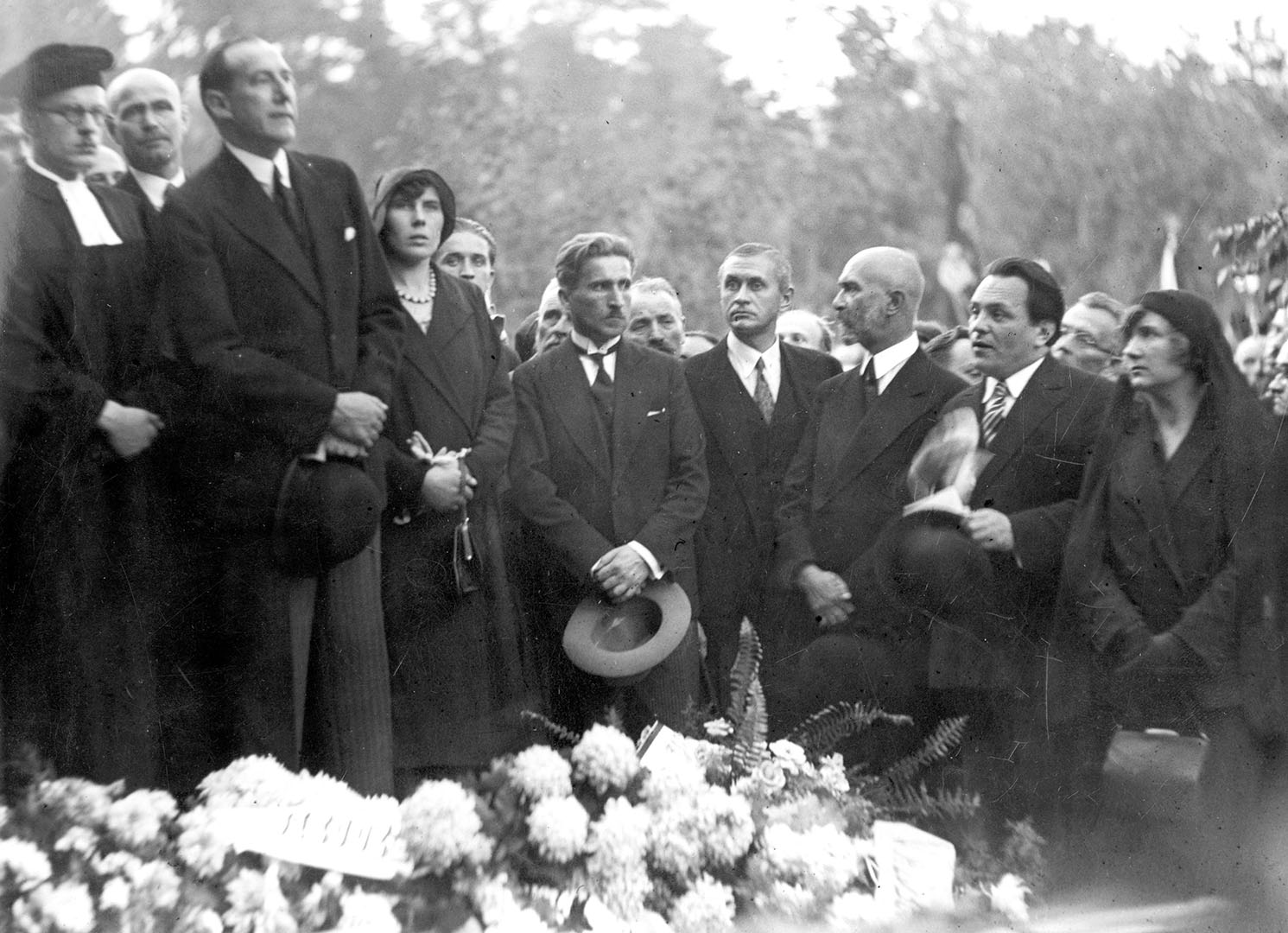
Hołówko’s sudden death evoked a generally unambiguous reaction in a country that was politically divided. Blame for the assassination was attributed to a radical wing of The Ukrainian nationalists. There were varying interpretations of the tragic event: for the Sanation government, it was a confirmation of the validity of the conciliatory course proposed by Hołówko; for the National Democrats, it reaffirmed the need for a more forceful approach and “rejection of the Ukrainian movement.” The only dissenting views were voiced by the Communists and the legal Ukrainian press.
The investigation dragged on mercilessly, and it was due to sheer chance that the perpetrators were ultimately captured. Following a pursuit in September 1932, Vasyl Bilas and Dmytro Danylyshyn were arrested for a robbery at a post office in Grodek Jagiellonski. At trial, Bilas admitted to being a member of the Organization of Ukrainian Nationalists and to having carried out Hołówko’s assassination. The court in Lwów sentenced them to the maximum available penalty for the Grodek robbery, not taking into account Hołówko’s murder. In the following year, at a trial held in Sambor, the executed men’s guilt for the Hołówko murder was officially established. The issue of political responsibility however, remained unresolved. There was no doubting the fact Hołówko’s assassins had been members of the OUN, but the trial and its context offered up four differing versions of the perpetrators’ motivations. According to the first, Hołówko fell victim to Ukrainian nationalists inspired by Weimar Germany; the second posited that Communists inspired the Ukrainians to kill him; the third claimed the murder was realized as a Polish provocation (by opponents of Hołówko’s policies), with a fourth alleging they acted neither through inspiration nor provocation, but from their own free will. Each version had its own logical basis, without any of them ever finding sufficient factual support. Following his death, Hołówko came to be a symbol of Polish-Ukrainian reconciliation, in spite of the fact that opposition to his views had been evident even within his own political ranks. Similar to virtually all of his contemporary publicists, he was of the belief that Poles held a position of cultural superiority over Ukrainians and Belarusians.
Prometheist and Federalist
He was troubled by a growing sense of historical calling in his life. (…) He would not have suspected — and we trust that even in his final moments it did not dawn on him — that the greatest work of his soul would begin at that moment when all the blood from his heart soaked through the raggedy bedsheets of a hotel room in Truskavets on an unremarkable evening, unexpectedly cut down by criminal treachery. He was silenced. Yet he speaks, and will continue to speak long and resoundingly, through our consciences.

In such a way did Wojciech Stpiczyński conclude the foreword to Tadeusz Hołówko’s unfinished memoirs, published after his tragic death. He was bidding farewell to a friend whose work strove for an understanding between nations at odds with each other, and who was to be the initiator and advocate of Polish-Ukrainian reconciliation and cooperation, and was ultimately murdered by uncompromising, radical members of the Organization of Ukrainian Nationalists. Stpiczyński, a skilled ideologue, was certainly exaggerating to some degree, as judgement as to Hołówko’s influence on the nationalities policy of the Second Polish Republic is divided, often being viewed as limited to oratory that wielded little real impact on policy. Nevertheless, as a publicist tackling such issues, he remains a strikingly memorable figure, perhaps in large part due to the circumstances surrounding his death.
Although neither a top-tier politician of the Polish Socialist Party or the Sanation government, Hołówko significantly shaped Polish thinking on Eastern policy as an advocate of federalist and Promethean ideas. He summed up this vision — which had in theory been under development for over a decade — in a speech delivered shortly before his death in June 1931. As chief of the Eastern Department at the Ministry of Foreign Affairs, and thus an executor of the Promethean idea, he was a firm believer that Poland’s key task in the East was to support the independence aspirations of non-Russian nations residing in the borderlands of the Soviet Union. The way he saw it, the Versailles settlement was unsustainable, and the crisis could only be resolved through Poland actively pursuing its policy, while at the same time aspiring to great power status. Such a role would be consolidated in the new order through the concept of unity in Central and Eastern Europe under Polish leadership. This had very little to do with power in the old sense, which was based on violent imperialism and colonial notions, but rather was more concerned with leading a movement of nations reborn. He wrote, “we ought to understand that our ambition is about being first among the young, not last among the old.” He was not a classical Prometheist in another sense — his anti-imperialism was not limited to solely anti-Russian sentiments. It was, fundamentally, anti-colonial, and in his vision, Poland should support all nations fighting for liberation in order to dismantle those empires that still existed.
This emancipatory stance, however, did not preclude him from a firm defence of both the May Coup and the Brest elections. Regardless, he was not an uncritical follower of Piłsudski, and was especially disillusioned by the abandonment of the federalist idea, which in his reckoning occurred in 1919–1920, culminating in the shameful Treaty of Riga in 1921, which brought an end to the Polish-Soviet War. He later wrote: “Indeed with astonishing recklessness, Poland, in Riga, abandoned its Eastern policy aimed at federation […]. Let us name things exactly as they are— we abandoned, we betrayed Petliura in Riga.”
“The ‘Kirgiz,’ Emissary, Socialist
Hołówko signed up to the fight for independence very early on. In 1909, he commenced his studies in St. Petersburg, quickly affiliating with the Polish Socialist Party (PPS), where he was adorned with the pseudonym “Kirgiz.” At the Central School of PPS, he came into the orbit of Józef Piłsudski, who remained for him a lifelong authority and point of reference. For jointly leading a student strike, he was expelled from university. In 1913, he embarked on his career as a publicist in Voice of the young, the organ of the Progressive Independence Youth Association. Following the outbreak of the Great War, he moved to Warsaw and joined up with the Polish Military Organization. Continuing to write, his texts at that time already alluded to the idea of a federation of Poles, Belarusians, Ukrainians, and Lithuanians. Following his imprisonment in German Prisoner of war camps, after his release in May 1916, he continued his clandestine publicist work. The political situation changed with the outbreak of the Bolshevik Revolution. Associates of Piłsudski quickly came to realize what was essential – both a reorientation of existing policy and ensuring the independence-minded left controlled Polish forces in revolutionary Russia. Hołówko became an emissary for the secret Organization “A,” tasked with bringing this goal to reality. He headed to Moscow, meeting there with Lenin and Trotsky, in an attempt to persuade them to green light the formation of a Polish army. His efforts were ultimately in vain. Years down the line, he decided to recount the story of this mission in his memoirs, however the bullets fired in Truskavets ended any possibility of their completion. Those uncompleted memoirs were later published in two volumes, titled Across Two Fronts and Through the Land of the Red Tsar.
After the fiasco of the Moscow talks, he moved into a new phase. In November 1918, he was to be found in Lublin, participating in the establishment of the People’s Government. He rose to be an unusually prolific publicist for the left, his mandate covering not only national and foreign policy but issues of social justice too. In 1924, he re-engaged in politics, joining the PPS Central Executive Committee. He was a supporter of the May Coup, and in 1927, he left the PPS, siding with Marshal Piłsudski. He was one of the founders of the Non-party Bloc for Cooperation with the Government (BBWR). For three years, as chief of the Eastern Department at the Ministry of Foreign Affairs, he transformed Promethean ideas into political practice, building along the way a network of contacts stretching from Tehran through Ankara to Paris. In the wake of the “Brest elections,” he assumed the role of BBWR deputy. With his seat in the Sejm already established, following a series of sabotage and pacification actions, he allied to negotiations with the Ukrainian National Democratic Alliance in the summer of 1930. Despite the fact that the talks proved fruitless, for Ukrainian nationalists, they were viewed as nothing short of betrayal. And it may well be those very negotiations that contributed to Hołówko’s untimely demise.
Exile in Turkestan: The Land of Childhood
Returning to Hołówko’s childhood years is fascinating, yet is askin to roaming through a dense mist. It is all the more fascinating, for back then it was a time where Hołówko’s character was apparently fashioned, a formative period in which his biographers suggest isolation and cultural alienation may have had a heavy bearing on his moral convictions and political reasoning. In essence, the academic biographer Iwo Werschler introduces his 1984 work at the moment when Hołówko enrolled as a student in St. Petersburg, and only through narrative necessity did he offer a description of his early childhood in what could be called the “Turkestan period.” Werschler notes, “Tadeusz Ludwik Hołówko was born on September 15, 1889, in Semipalatinsk, Turkestan (present day Kazakhstan). And this prompts the questions: where were his roots to be found? Who were his parents, from where and how did they end up in this remote Asian country? About Maria’s mother, née Maciejewska, little information has come to light. It is known however, that Tadeusz’s father, Wacław Hołówko, hailed from Belarus, specifically the Nowogródek region.“
The origin of the Hołówko family, along with their role in Poland’s turbulent history, beginning with the Khmelnytsky Uprising and the Battle of Vienna, are largely the conjecture of the biographer. Insight into times closer to Tadeusz is furnished by Helena, his first wife, with whom Werschler was granted an interview for his book. It has to be remembered, nevertheless, with this being family memory, there is no guarantee that elements of self-stylization and embellishment did not creep into those recollections. For their participation in the Kościuszko Uprising, Hołówko’s ancestors were claimed to have been stripped of their estate in Volhynia, after which they became leaseholders of land in the Nowogródek region. Alexander, Tadeusz’s great-grandfather, distinguished himself during the November Uprising. By way of reward, he was granted 60 hectares of forest, where he established the Puszcza agricultural estate, later known as Hołówkowo. The tradition of resistance had to have been strong in the family, as Tadeusz’s grandfather, Józef, had not hesitated to join the ranks fighting in the January Uprising. Alongside the insurgent tradition, it was with him that a new tradition in the family made an appearance – the tradition of exile. Józef was allowed to return to his homeland due to a tsarist amnesty. After that, to where he was exiled onwards remains unknown. In Poland he left behind sons, including Wacław. Upon finishing school in Białystok, Wacław enrolled at the Institute of Technology in St. Petersburg, a place at which he did not stay for very long. Following political student unrest, he was exiled to Siberia, and subsequently stripped of any right to return to the European part of Russia. He wandered through various parts of Siberia, eventually reaching Russian-controlled Central Asia, which at that time was known as Western Turkestan. He settled in Semipalatinsk (now Semei), at the foot of the Altai and Tien Shan mountains. It was there that Tadeusz was born. In the early years of the 1890s, Wacław relocated to Zharkent, close to the Chinese border. As director of the customs office, he built a house there, establishing a garden and an orchard. He was however, not able to return to Poland.

Very little do we know about Hołówka’s years in Turkestan. As Werschler writes, despite Stanisław Mackiewicz’s persuasions, Hołówko did not manage to write down his childhood memories. Only through what can be gleaned from his texts and the stories shared with his loved ones is one able to paint a picture of the experience of the second generation of exiles. An invaluable, though admittedly far from objective source, appears in the shape of Hołówka’s friend, Wincenty Rzymowski. According to this version, Tadeusz spent his formative years “in a land forgotten by both God and men alike, literally thousands of kilometers from Poland, from Europe, from Roman civilization.” Rzymowski, a radical supporter of Piłsudski, details Tadeusz’s family home—one of only two Polish homes in the whole of Żarkent—as filled with patriotic longing for Poland, where animosity toward the Tsarist regime was equally strong as distrust for revolutionary Russia, which was “duping Poles with illusions of brotherhood in arms.” Aside from this anti-Russian sentiment, there existed a not insignificant sense of cultural alienation among the Asians, described in the categories of semi-savagery characteristic of the era. There were nevertheless some positive aspects, for instance the breathtaking nature. Rzymowski writes: “Dzharkent lay almost at the foot of the towering Tian Shan mountains […]. These mountains would, in his youth, forever remain in Hołówka’s soul, as monuments to beauty and majesty.” Yet even here one detects the unease of exile, for “everything conspired to denationalize the souls of these children, to enchant their eyes with the charm of foreign nature, to fill their imagination with an alien world, and to lock their thoughts into the expression of a foreign tongue.” Werschler aptly characterizes this form of patriotism, disconnected from the homeland, as romantic and close to mystical.

In line with family tradition, Hołówko was sent to school in the provincial capital of Verny (present-day Almaty), over 300 kilometers from Zharkent. Rzymowski, and subsequently Werschler, trace Tadeusz’s later political stance back to this period. In this Russian school student, the foreign son of an oppressed nation, who found himself among the representatives of other oppressed nations, tolerance and understanding for the independence aspirations of others begin to take root, seeds of his Promethean ideals. It was also there, that his unequivocal animosity toward Russians, regardless of their social background, took on a more pronounced form. He reads extensively, with his intellectual horizons demarcated on the one hand by the romantics and neo-romantics, on the other by Sienkiewicz, and on yet another by socialist magazines and books. Already in Verny, during the 1905 Revolution, he begins to engage politically, establishing cooperation with the Socialist-Revolutionary party, for which he risks being expelled from school and blacklisted. In spite of all this, he succeeds in finishing his secondary school education and, as a twenty year old shaped by patriotic and socialist ideals, heads off to the tsarist capital.
From Exile to Emissary
There are few people remaining today who remember a figure such as Tadeusz Hołówko. His star faded into obscurity, along with many influential figures from the first half of the 20th century. All things considered, he never was a front-line politician, neither during the struggle for independence nor later following the rebirth of the Polish Republic. He did not especially stand out politically, remaining a loyal follower of the Marshal—first in the Polish Socialist Party and the Polish Military Organization, later on in democratic and sanationist Poland. His biography, however—both political and intellectual, but also, and possibly above all, in its mundanity, understood as a life journey—is certainly unique. For Tadeusz Hołówko, like few others, through the choices he made and also by way of those elements of fate beyond his control, connected the geographically distant worlds of Siberia, the Caucasus, Ukraine, and Poland.
PhD. Bartłomiej Krzysztan, assistant professor at the Institute of Political Studies of the Polish Academy of Sciences, specialist in the field of political anthropology, cultural and political memory, and post-colonialism.

Translated by Jan Dobrodumow.