
Logo Muzeum Pamięci Sybiru w Białymstoku
Logo Centrum Mieroszewskiego
Logo Muzeum Pamięci Sybiru w Białymstoku
szukaj - search

Pokaż więcej wyników

Generic selectors
Exact matches only
Search in title
Search in content
Post Type Selectors
"><font style="vertical-align: inherit
Logo Muzeum Pamięci Sybiru w Białymstoku
Logo Centrum Mieroszewskiego
Logo Muzeum Pamięci Sybiru w Białymstoku
szukaj - search

Pokaż więcej wyników

Generic selectors
Exact matches only
Search in title
Search in content
Post Type Selectors
"><font style="vertical-align: inherit
Logo Muzeum Pamięci Sybiru w Białymstoku
Logo Centrum Mieroszewskiego
szukaj - search

Pokaż więcej wyników

Generic selectors
Exact matches only
Search in title
Search in content
Post Type Selectors
"><font style="vertical-align: inherit
Pokazuję wyniki dla: #Photography
30.11.1939 WHEN DED MOROZ WAS NOT IN FAVOUR – THE BEGINNING OF THE WINTER WAR

30.11.1939 WHEN DED MOROZ WAS NOT IN FAVOUR – THE BEGINNING OF THE WINTER WAR

On the 30th of November 1939, without officially declaring war, the Red Army launched its attack on Finland. Soviet propaganda pointed out how this came in response to Finnish provocations. The truth, however, was different – it was the Soviets who had shelled their own territory in order to obtain the pretext to attack. What the Kremlin did not expect was how embarrassing the decision to invade would ultimately turn out to be. Moreover, Vyacheslav Molotov, People’s Commissar of Foreign Affairs of the USSR, was said to have assured that on Stalin’s birthday (the 18th of December) he would drink a cocktail in honour of his leader in captured Helsinki. Cocktails were indeed eagerly “delivered” to the Soviets, but they were Molotov cocktails, or incendiary bottles, employed by Finns to attack Soviet tanks. Their name, which was coined by Finnish soldiers, was intended as a response to the words of the People’s Commissar.

read more
28.10.1950 State controlled theft – monetary reform in Poland.

28.10.1950 State controlled theft – monetary reform in Poland.

On the morning of the October the 29th, 1950, surprising news spread throughout Poland – the previous evening the government had enacted monetary reform. Although the new communist authorities had already made changes in the monetary field in 1944-1945, exchanging money from the years of occupation for the Polish zloty, nevertheless it was the operation in the autumn of 1950 which came to be imprinted in the memory of Poles.

read more
History in liquidation – removal of Polish memorials in Russia

History in liquidation – removal of Polish memorials in Russia

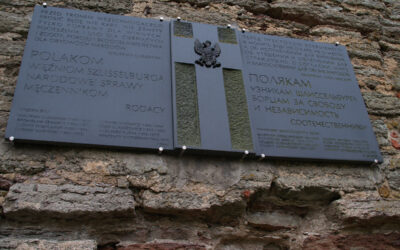
Ewa Ziółkowska: Last year in Russia, one by one, Polish memorial signs disappeared in unexplained circumstances. Crosses, plaques and entire multi-ton stone monuments were removed. This is the Russian response to Poland’s involvement in helping Ukraine attacked by Russia in February 2022.

read more
22.09.1947. “Democracy” under control – the rise of the Cominform

22.09.1947. “Democracy” under control – the rise of the Cominform

In May 1947 Joseph Stalin decided to dissolve the Comintern, also called the Third International. It was an organisation uniting the communist parties all around the world. Thanks to its functioning the Soviets, who pulled the organisation’s strings, were able to control communist activities in different parts of the globe. The parties who formed the Cominterm were considered to be Moscow spies and not without reason. However, the course of World War II and the disposition for closer cooperation between the West and the Soviet Union forced Stalin to bring about its dissolution. This was his way of showing “good will” to the Americans and British, pointing out that the world communist revolution was no longer in his sphere of interests. But the war finally came to an end, and along with it, Stalin’s “good will”…

read more
Photojournalism: Vorkutlag

Photojournalism: Vorkutlag

Tomasz Kizny: I came to Vorkuta in May 1990, probably as one of the first foreigners who reached these regions of the USSR. The first one who came here voluntarily, because earlier Poles, Lithuanians, Latvians, Germans and nations of the USSR had been sent to Vorkutlag camps. I came voluntarily but illegally because I had been denied the permission to enter the Vorkuta area, which was then required from foreigners. However, I decided to go…

read more