
Elżbieta Dziuk-Renik
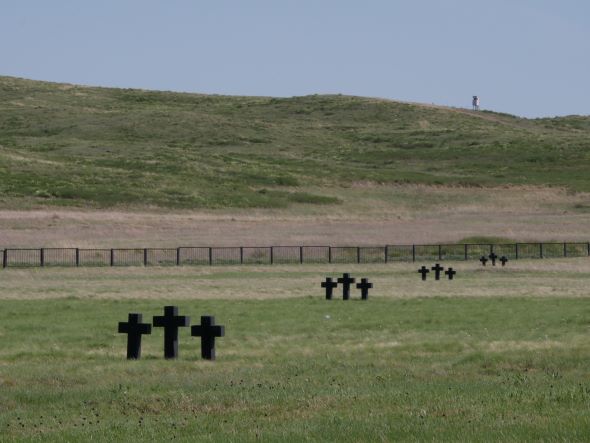
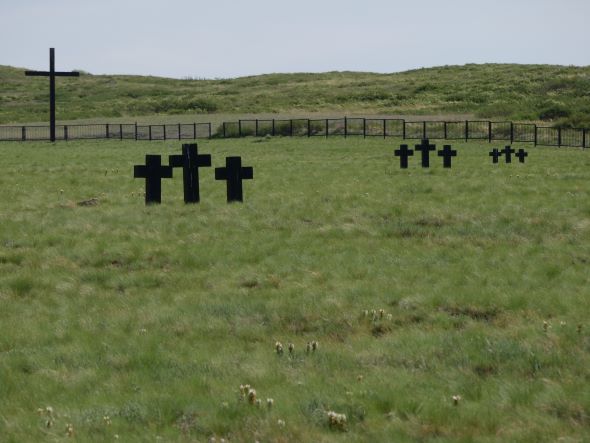
The cemetery in Spassk near Karaganda in Kazakhstan. This is a difficult place for a photographer. Here lie the buried dead prisoners of a special NKVD camp; initially a camp for prisoners of war, and after World War II – a forced labour camp for political prisoners. The camp was one of the gulags of the complex named Karaganda Corrective Labour Camp (Karlag). As such, it formed part of Stalin’s system of forced labour camps.
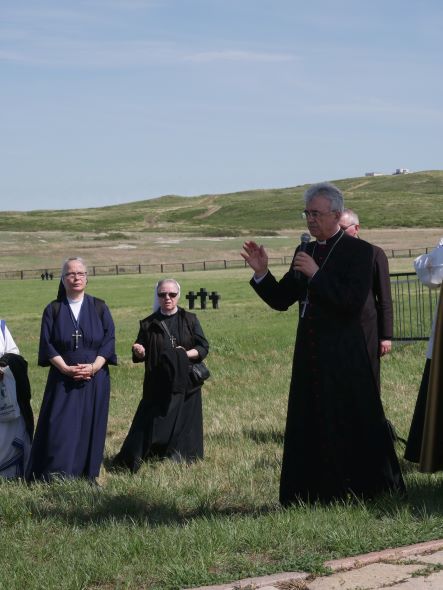
It is a pleasant, sunny May day, in a steppe basin surrounded by low hills. An almost idyllic scene? However, the guard towers still standing on the hills serve as stark reminders of this place’s dramatic past.
Everyone had to work
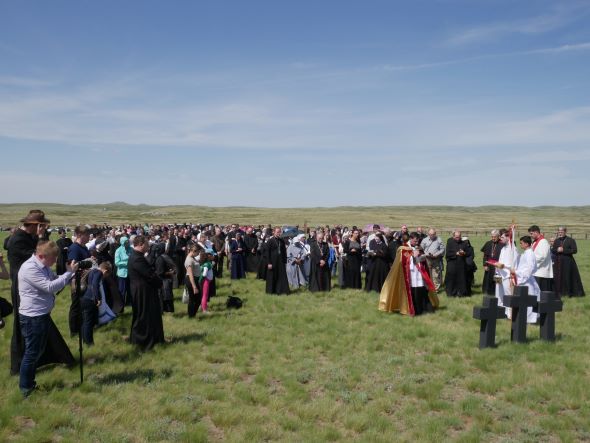
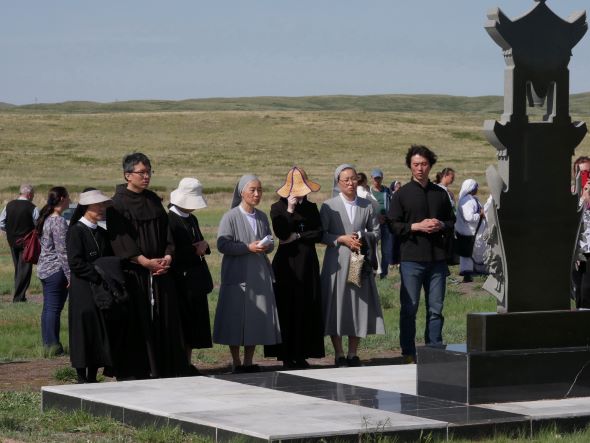
Along with a large group of participants of the Mariological Congress held in Karaganda, I take part in the Stations of the Cross in Spassk on the 12th of May, 2017. I pass black crosses, stepping over ground that covers the remains of thousands of deceased prisoners. As I tread across the nameless mounds, am I violating the memory of those who remain here forever? Does my visit not disturb the silent eternal rest of those who perished here from exhaustion and disease, mostly tuberculosis, along with dysentery and an infectious jaundice epidemic? Their health was further deteriorated by the living conditions in the camp and the punishing climate of the Kazakh steppe. During extremely freezing winters, the temperature drops to -40 degrees Celsius. Meanwhile, the summer is short and scorching: temperatures can reach as high as 40 degrees.
The camp inmates suffered here from hunger and exhaustion as a result of slave labour, and everyone was obliged to work, even the disabled, the maimed, and the elderly, who were all gathered in this camp. It is over those nameless graves that I now walk, and I wonder to myself: how might I go about photographing this steppe cemetery?
Simple crosses mark successive stations of the Way of the Cross. I take photos but the sound of prayers, testimonies of former prisoners held captive in the camp, along with fragments of interrogations conducted by NKVD officers years ago being read aloud, all affect me far more powerfully than the images captured by my camera. One of the nuns reads out a dialogue between an NKVD officer and Blessed Father Władysław Bukowiński during an interrogation: “What are you all doing?” “Praying.” “Prayer is forbidden here.” And yet, so many years later, we are now able to pray here…
Tragedies from years past
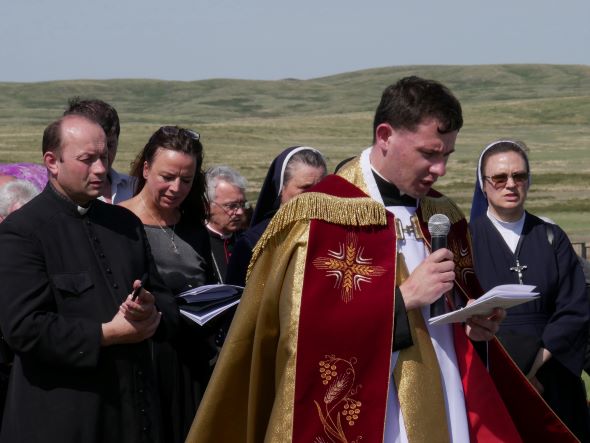
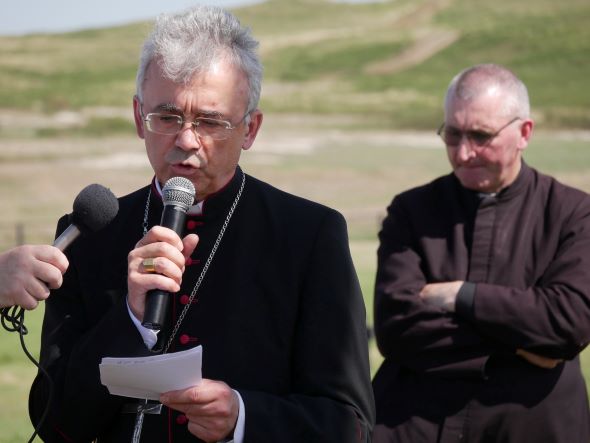
Meditations on the Way of the Cross are quietly read out by bishop Joseph Werth, an ordinary of the Russian Novosibirsk’s diocese. They are dedicated to the experiences of the Stalinist forced labour camp prisoners. The image in my camera blurs once again, as my imagination is engulfed in tragedies from years gone by…
The Stations of the Cross are performed at the Spassk cemetery by priests and nuns working in Kazakhstan and neighbouring countries. Among them are the Sisters of Mother Teresa of Calcutta in their signature white habits, alongside nuns from Korea.
The silence of the pilgrimage between subsequent Stations is interrupted by poignant singing. It’s the Stabat Mater Dolorosa performed by Katarzyna Chęsa, a lay missionary and graduate of the vocal faculty at the Bydgoszcz Academy of Music. Her singing is both a moving lament and a meditation upon the dramatic nature of human fate.
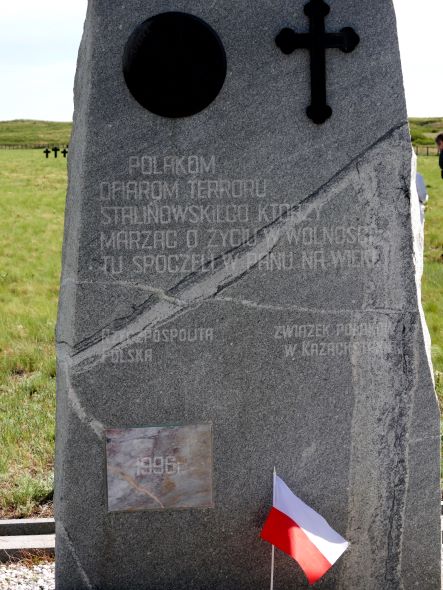
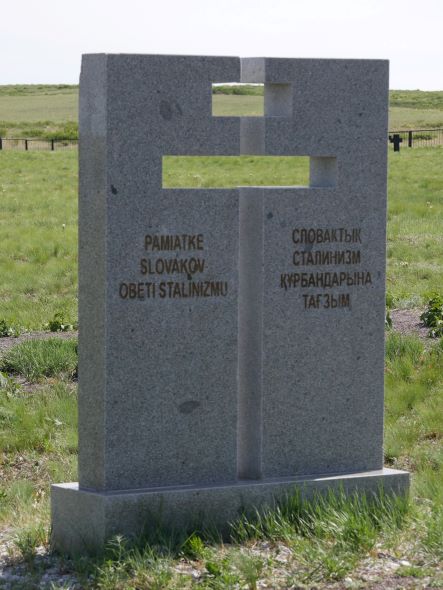
We pass by a dozen or so obelisks commemorating those who died in the Spassk camp. The memorials for their countrymen have been erected by the Kazakhs, Russians, Slovaks, Koreans, Japanese, and Italians, among others. Among them is a monument dedicated to the deceased Poles, bearing the inscription: POLISH VICTIMS OF THE STALINIST TERROR WHO, DREAMING OF A LIFE IN FREEDOM, REST HERE WITH THE LORD FOR ALL ETERNITY.
The cemetery in Spassk – a difficult place to photograph. A question flashes through my brain – should I even be photographing here? Perhaps in such places, what matters above all is silence…, quiet prayer…reflection…
Text and photos: Elżbieta Dziuk-Renik – traveller and photographer
Translated by Hanna Nawrocka