



Letters from Siberia on Birch Bark
Ērika Jaskólska Residents of Latvia deported to Siberia by the Soviets sent letters to their loved ones written on birch bark. In 2009, these letters were inscribed in the Latvian register of UNESCO’s Memory of the World programme. The collection of letters written by...
Hues of Sybir
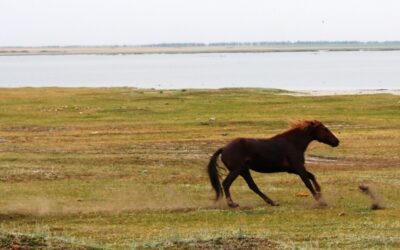
Anna Pisula Motto: The only beautiful thing there in Kazakhstan was the tulips blooming on the steppes in early spring. After winter, the vast steppes, saturated with meltwater, turned green. As soon as the snow had melted – sometimes as early as late March – tulips...
The Belarusian Katyn list. What is it, and who might have been on it?
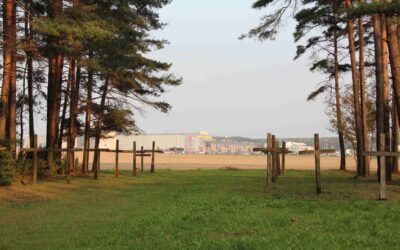
Maciej Wyrwa: To this day, we do not know where and how the victims of the Katyn massacre were executed in Belarus, nor where their bodies were hidden.
The small peoples of Siberia – revival and the struggle for survival
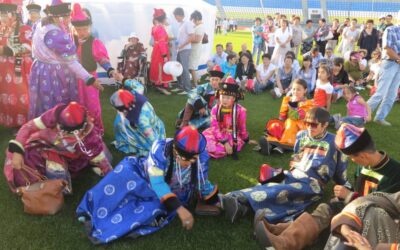
Ewa Nowicka-Rusek: Small, and sometimes very small, peoples living across the vast expanse of Siberia are struggling, with varying degrees of success, to survive—both as culturally distinct communities and in terms of maintaining their individual ethnic identities.

From ‘lost’ to ‘recovered’ territories. The resettlement of the Polish population from the Eastern Borderlands of the Second Polish Republic to the west between 1944 and 1946
Grzegorz Hryciuk: After the Tehran Conference and the establishment of the Polish Committee of National Liberation, the Soviet authorities started resettling Lithuanians, Belarusians and Ukrainians from areas situated west of the new Polish-Soviet border.

Freedom, bitterness, stagnation
The Soviet Union, attacked by Hitler’s coalition, became an area of real migration of peoples from the summer of 1941. Millions of refugees and evacuees moved chaotically from west to east and from north to south, including hundreds of thousands of Polish citizens… An interview about the turning point that took place in the summer of 1941 and the situation of those who partially regained their freedom but had to risk their lives in return with Prof. Albin Głowacki, one of the leading experts on the history of Poles and Polish citizens in the Soviet Union.

Post-January Uprising exiles from Lithuania: what do the Siberian archives say about them?
Viktor Bilotas: Between 2016 and 2018, the Lithuanian Cultural Council funded the “Lithuanian Siberia” project. Through visits to the archives of Tobolsk, Tomsk, and Krasnoyarsk, its participants acquired approximately 3,000 copies of documents relating primarily to exiles from the Augustów, Vilnius, and Kaunas Governorates.

The shortest route to Poland? Repatriation of Polish citizens from the USSR in 1945–1946
Grzegorz Hryciuk: The Polish deportees who arrived from the USSR were condemned for decades to a kind of selective memory. These remained their personal trauma, which they could only share with their loved ones, who had experienced the same fate as them.

The dramatic fate of Zygmunt Sierakowski
Mariusz Kulik: Through his actions, Zygmunt Sierakowski put the good of the general public and his homeland above his own. His participation in the January Uprising shows the dramatic fate of many Poles serving in the Russian army at that time. Many of them abandoned promising careers and stability, choosing an uncertain future and, often, poverty.