
“Poles! The hour of vengeance has come. Today die or prevail! Let us go, and let your breasts be Thermopylae for your enemies!”
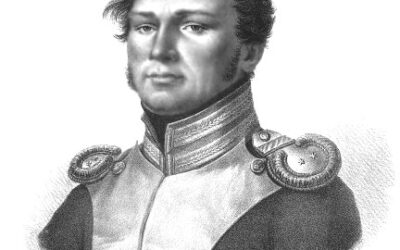
30.11.1830 – The outbreak of the November Uprising
read more

Pokaż więcej wyników
Pokaż więcej wyników
“Poles! The hour of vengeance has come. Today die or prevail! Let us go, and let your breasts be Thermopylae for your enemies!”

The date of 11 November 1918, being the day on which Poland regained its independence, is a symbolic date. Exactly on that day, an armistice ending the First World War was concluded in a wagon in the forest of Compiègne.

There was only the sight of German units departing the city, riding down Lipowa Street, followed by Soviet troops who entered it— a sequence of events that might well have given the impression of a ceremonial march. This was how Białystok fell under Soviet control, a situation that remained until 27 June 1941, with the city once more being seized by the Germans

By 1810 Franc’s political and military position in Europe was unassailable. The only blemish on this imperial panorama was the ongoing war with Great Britain, for both sides the most critical theatre of operations at the time being the Iberian Peninsula. However, French Emperor Napoleon Bonaparte believed the only way to defeat the British was through the imposition of a complete commercial blockade of the British Isles. The blockade, set in motion in 1806, had failed to break British resistance—even after Russia joined it.

On 28 June 1914 in Sarajevo, in Bosnia (then part of the Austrian-Hungarian Empire), the assassination of Austrian heir to the throne, Archduke Franz Ferdinand, and his wife Sophie was successfully carried out. The attack was organised by the Serbian nationalist terrorist group the “Black Hand,” and the assassin who fired the fatal shots was Gavrilo Princip.

If one speaks of the outbreak of the Second World War, generally September 1939 comes to mind. Particular focus is placed on 1 and 17 September —dates signifying the German and Soviet aggression against Poland. Yet nobody can be certain how events would have unfolded had it not been for events that took place in Moscow during the night of 23–24 August 1939. It was at that time that key decisions were made, decisions whose direct consequence was the two invasions of the Republic of Poland. Therefore it would not be erroneous to state that, in reality, the war actually began in August…

The end of World War I did not mean the arrival of absolute peace in Europe. On the contrary, – one effect of the Great War was the economic instability seen in numerous countries. For the Entente countries, reparations paid by Germany and the return of loans taken out by Russia during the tsarist era offered a chance for overcoming such difficulties. However, both the Germans and the Russians were not so willing to pay off their debts. It was therefore decided to deal with these two urgent matters at an international economic conference, which was convened in the spring of 1922 in Genoa, Italy.

Soviet aggression against Poland, which began on the morning of September the 17th, 1939, came as a surprise for the authorities, the civilian population, the police, the army, and the Border Protection Corps. However, this was only a small taste of what the aggressor had in store for Poles in the coming months. A group of almost 22 thousand Polish citizens selected by the Soviets were to meet a special fate, being held in three special NKVD prisoner-of-war camps prisons in the occupied territories of Poland.

In 1725, Tsar Peter I sent the Danish sailor Vitus Bering to the far east in order to observe if there was a land connection between Asia and North America. His activity, acting under Russian orders, was associated with St. Petersburg’s growing interest in Alaska. Firstly, the focus was on research expeditions, and in the 80s the first Russian colonies were established there. However, it soon turned out that Alaska is an area that brings Russia more problems than profits. Insufficient financial resources and too little military involvement in the North Pacific area did not allow for much.

The year 1794 marked the decline of the Polish-Lithuanian Commonwealth. The state was already heavily reduced territorially after two partitions and equally greatly dependent on neighbouring states, above all Russia. Tsarist troops were stationed in the country, banks collapsed and prices rose. It seemed that the final decay of the state was only a matter of time. It was obvious that patriotic circles were not going to watch this calmly.