

Collection of the Sybir Memorial Museum.
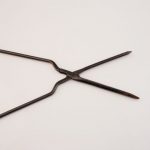
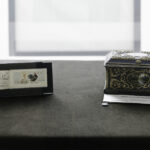
Leading up to the war, the Babiel family—father Aleksander, mother Helena, and their children Henryk, Jadwiga Łucja, Władysław, Danuta and Feliks—lived in the small settlement of Łomżyca near Łomża. In September of 1939 this area also came under Soviet occupation. The Babiels rapidly fell victim to Soviet repression and terror. First of all, in the mid-1940, the family butcher shop was shut down. In March of 1941 the NKVD arrested Henryk, and in June of that same year Aleksander and Helena were deported to Kazakhstan along with their remaining children. They were packed off to the settlement of Tonkores in the Aktobe Oblast. There the family earned a living by working in the fields and tending cattle. Following the announcement on 30 July 1941 of the so-called “amnesty” for Polish citizens, the Babiels moved to the town of Martuk (which is also located in the Aktobe Oblast). Their main occupation there became shoemaking, although some family members also worked in warehouses, on the railway, or sewing clothing. In 1942, 15-year-old Feliks also began to work for a living. In the beginning he wove baskets, but the following year he was employed in a metalworking and sheet-metal shop. In his free time he visited nearby villages and repaired metal utensils in exchange for food. It was during this time that he was able to put together the toolbox and tools which are shown in the photograph above.
In 1943 Władysław joined up with the so-called Berling Army. He started out on his combat path by taking part in the Battle of Lenino in October 1943, during which he was wounded. He later completed officer training and commanded a platoon and subsequently the artillery battery of the 7th Infantry Regiment.
In 1944 the family reached the territory of what is present-day Ukraine, returning to Poland at the end of 1945. They were joined a year later by their youngest daughter, Danuta.